Breast Lift with Implants
A breast lift with implants is a highly personalized procedure that can address both breast sagging and loss of volume or fullness. Your consultation with Dr. Aimé begins with understanding the changes you would like to make and creating a surgical plan tailored to your anatomy and goals.

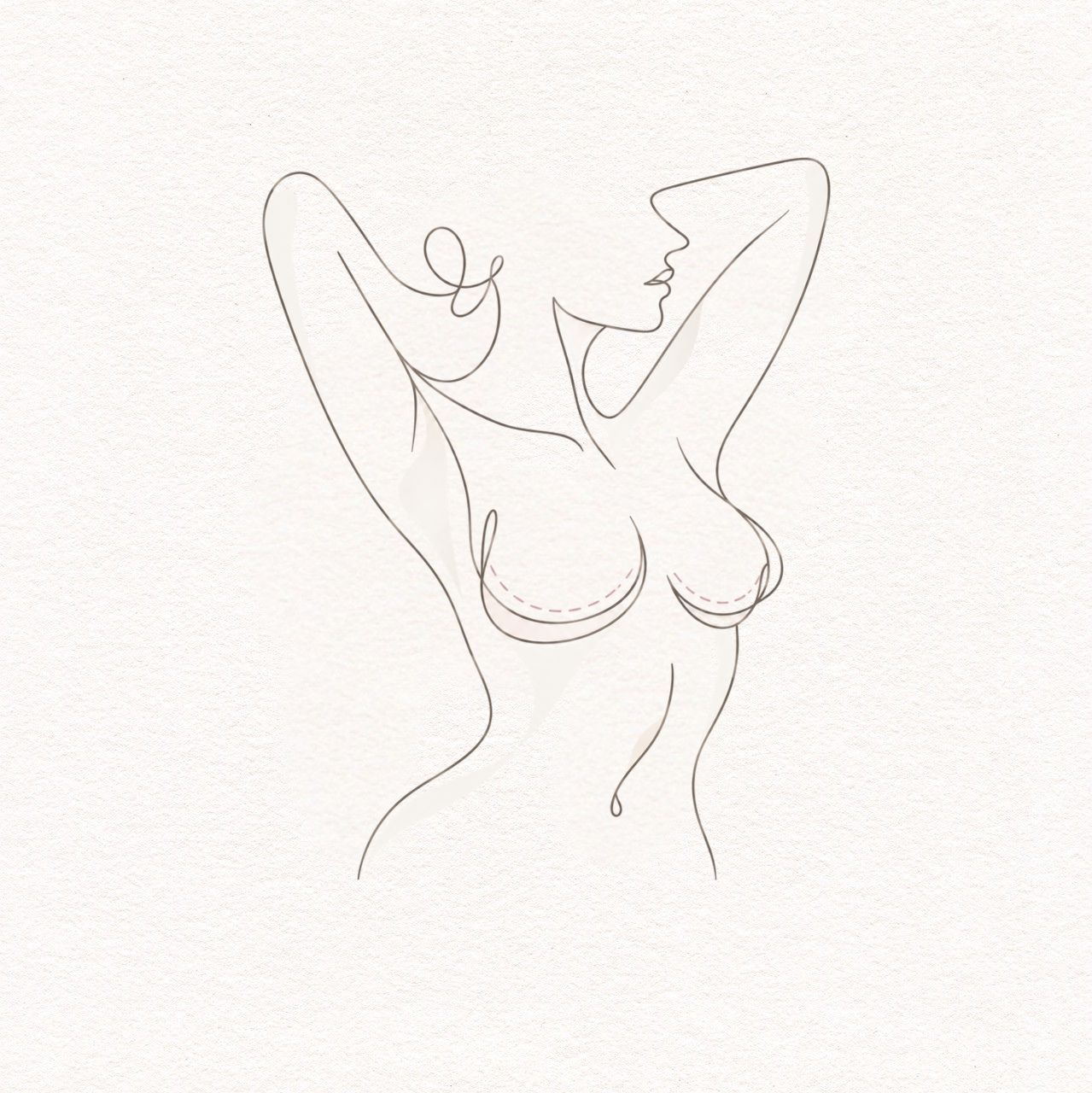
A Personalized Approach to Breast Lift with Implants
A breast lift with implants is highly customizable because the lift and implant accomplish different goals. The lift reshapes and repositions your existing breast tissue and removes excess skin, while the implant adds volume and fullness. Dr. Victoria Aimé begins with an exam and detailed measurements, considering your breast volume and asymmetry, skin quality, tissue thickness, nipple position, breast shape, and chest dimensions.
Your goals are equally important. Some patients want to restore volume lost after pregnancy, breastfeeding, weight loss, or aging, while others want a rounder, fuller breast shape in addition to lifting the breasts. Inspiration photos, implant sizers, and a discussion of your preferred size, upper breast fullness, and projection help define the look you are trying to achieve.
These considerations guide the lift pattern, implant size and profile, implant pocket, and how the breast tissue and skin are reshaped around the implant. Together, they allow Dr. Aimé to tailor both the lift and augmentation to your anatomy and goals rather than relying on a predetermined implant size or lift technique.
What you need to know
Every procedure and treatment we offer is thoughtfully designed to meet your unique goals, lifestyle, and anatomy. Below, you’ll find key details about what to expect—from how the procedure works to recovery guidance and ideal candidacy—so you can feel informed, confident, and empowered at every step of your journey.

Surgery Length: 4–6 hours
Anesthesia: General anesthesia
Setting: Outpatient (unless combined with procedures requiring overnight stay)
Drains: Typically not required
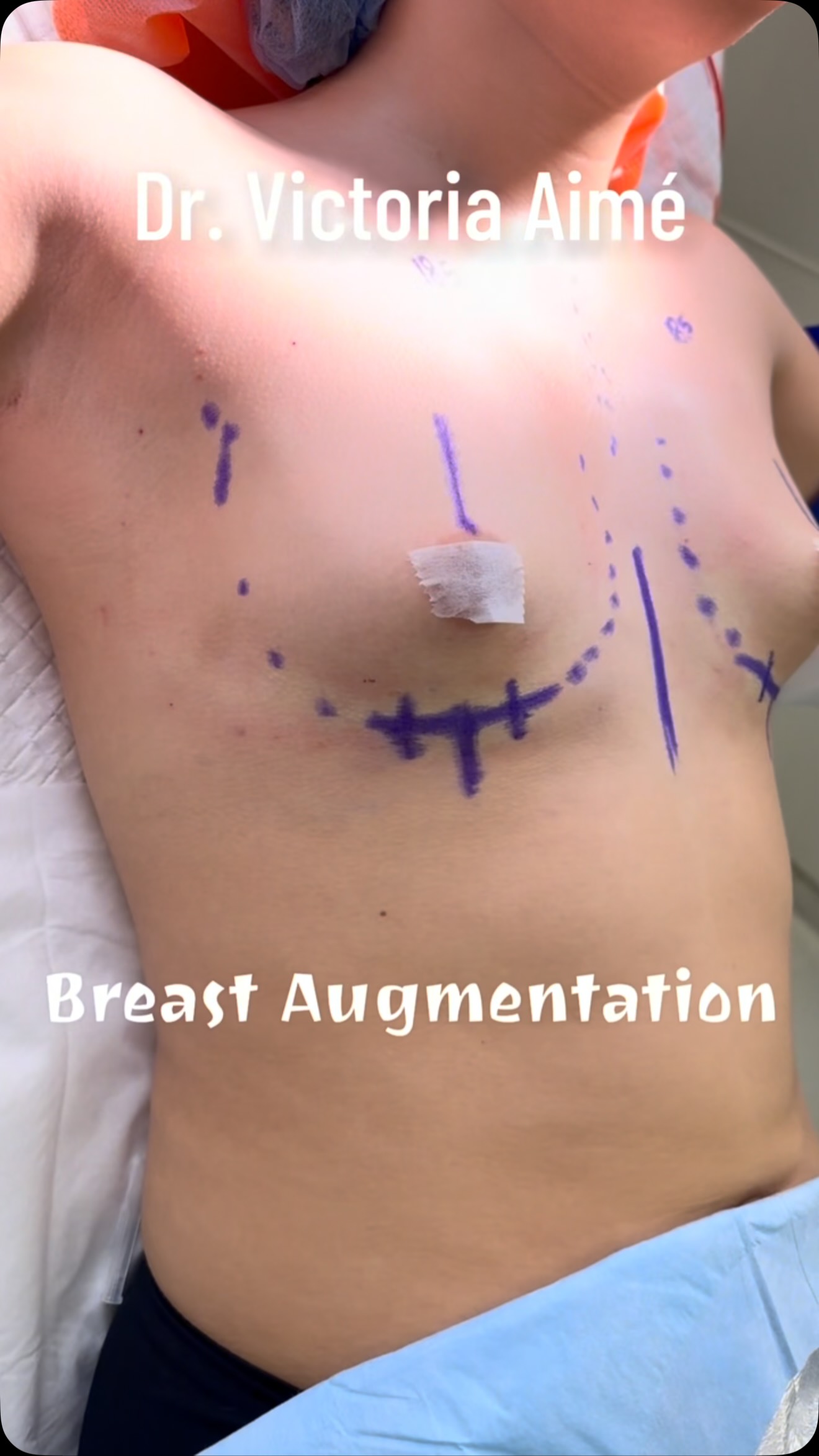
Incision Pattern: Around the areola, vertically down from the areola, and along the lower breast crease
Recovery Time: 2–4 weeks for light activities
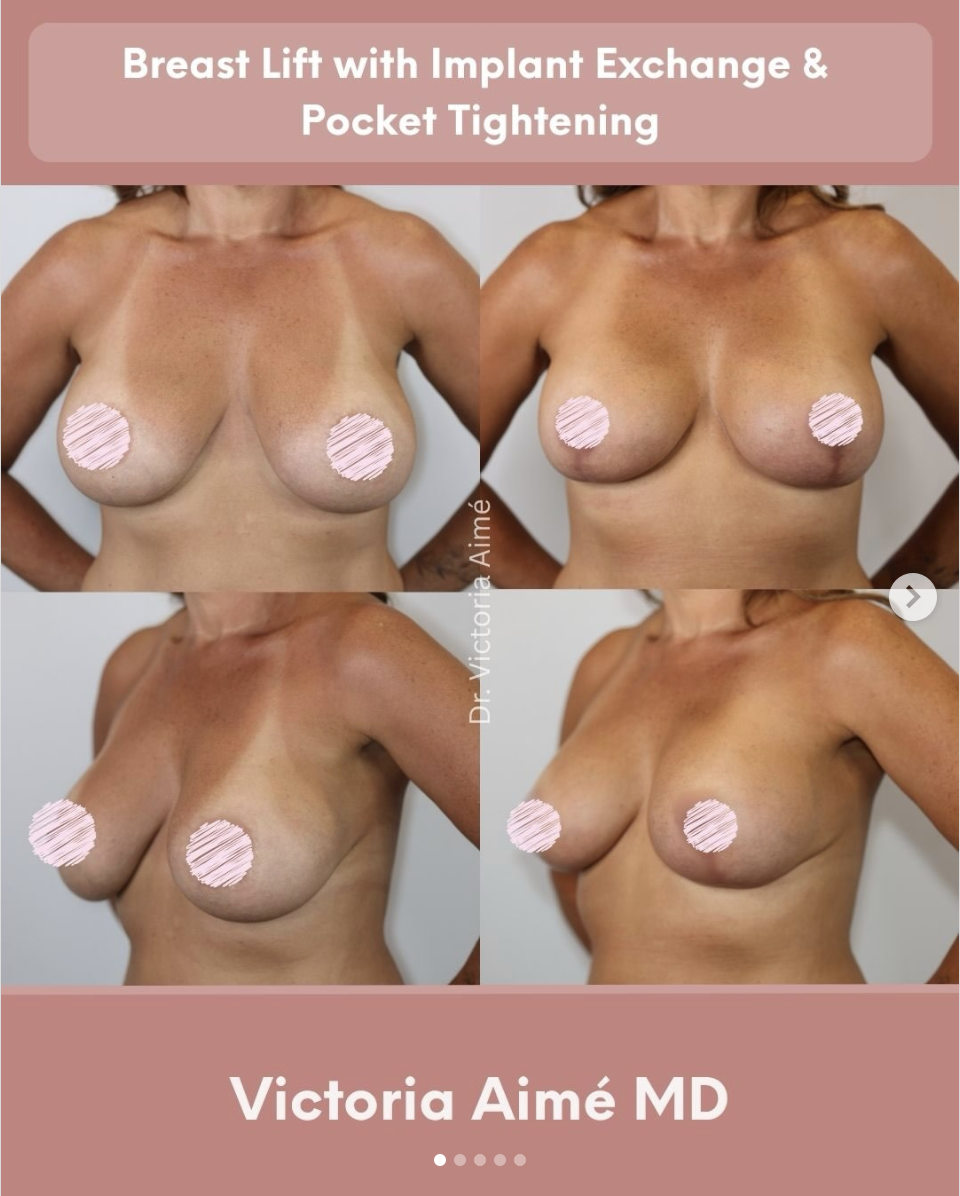
Restores breast roundness, fullness, and a more youthful shape
Removes stretched, sagging skin
Repositions the nipple to a more youthful location
Decreases large areola size
Restores lost breast volume and upper breast fullness
Enhances breast symmetry and balance
Improves breast projection and overall proportions
Improves bra and clothing fit
Gives the torso a longer, leaner appearance
You may be a good candidate for a breast lift with implants if you:
Have sagging, deflated, or pendulous breasts
Have lost breast volume or desire more fullness
Want increased upper breast fullness and projection
Have enlarged or downward-pointing nipples or areolas
Have breast asymmetry
Are in overall good health
Do not smoke or are willing to stop
Have realistic expectations about what surgery can and cannot achieve

An overview of the procedure

View our Before & After Gallery
Scroll through our gallery showcasing the transformations of real patients from Metropolitan Plastic Surgery.

Every person is unique and may have some similarities as well as differences to others in terms of their individual recovery experience. A mommy makeover is a combination of multiple procedures so it is common to have more downtime and required healing than if these procedures were performed individually.
Day of Surgery
You will generally go home the same day with a responsible adult and detailed postoperative instructions. Your surgical support bra will already be in place, and long-acting local anesthetic administered during surgery helps with early discomfort. Medications are prescribed to help control pain and nausea as needed, along with a short course of antibiotics, typically for the first 24 hours after surgery.
Begin taking short, frequent walks once you are safely able to do so. You may eat and drink as tolerated and should focus on hydration and adequate nutrition. Swelling, tightness, pressure, and soreness are normal. The breasts will typically appear high, firm, and swollen immediately after surgery, and the shape will change considerably as the tissues and implants settle.
Dr. Aimé will check in with you that evening to make sure you are recovering appropriately and address any questions or concerns. You will also have her direct contact information should you need to reach her during your recovery.
Days 1-3
Soreness, pressure, and tightness are common during the first few days. The long-acting numbing medication used during surgery typically wears off around day 3, so discomfort may temporarily become more noticeable. Bruising may become apparent, and swelling commonly increases during this period, often reaching its maximum around days 2–4.
Continue short, frequent walks, but avoid lifting more than 10 pounds. If you have young children, they can sit with you or on your lap, but you should avoid picking them up or carrying them. Avoid movements that create significant pulling or tension across the breast incisions.
You may shower beginning the day after surgery and should shower by day 3 for cleanliness. It is okay for soap and water to gently run over the incisions, but do not scrub them. You may gently raise your arms overhead to wash your hair if this is comfortable. If it is difficult, have a friend or family member wash your hair over a sink or consider professional hair washing once you feel up to leaving home.
Continue sleeping on your back and avoid sleeping on your side or stomach.
Weeks 1-2
Most patients feel substantially better during the first one to two weeks. Patients with desk-based or other non-physical jobs may return to work within several days to one week, while those with more physically demanding jobs are generally encouraged to take approximately two weeks off.
Continue the 10-pound lifting restriction and avoid repetitive pushing, pulling, or strenuous upper-body movements. This includes activities that may seem routine, such as vacuuming, cleaning windows, pulling wet laundry from the washer, or repeatedly loading and unloading a dishwasher. These restrictions are particularly important after a breast lift to avoid placing unnecessary tension on the healing incisions. Young children can sit on your lap, but you should continue to avoid lifting or carrying them.
Dr. Aimé typically sees you approximately one and two weeks after surgery to evaluate your incisions, swelling, breast shape, implant position, and early healing. Steri-Strips are usually removed between one and two weeks after surgery. If external suture knots are present, they are typically trimmed at approximately two weeks.
Driving can usually resume within the first week once you are no longer taking narcotic or other sedating medications and can comfortably perform all necessary driving and emergency maneuvers. Continue sleeping on your back rather than your side or stomach.
Weeks 2-4
Light exercise can generally begin around two weeks after surgery. Start gradually and pay attention to how your body responds rather than immediately returning to your previous routine. If an activity causes pain, pulling, increased swelling, or tension along the breast incisions, back off and allow more time before trying it again.
Sexual activity may also resume as early as two weeks if you feel comfortable. During early healing, keep activity relatively gentle, minimize your physical exertion, and avoid pressure, manipulation, or vigorous contact with the breasts.
Once the incisions are completely healed and closed, usually around three to four weeks, you may generally resume submerging in a pool, bath, or other body of water. Scar care can begin once the incisions are sufficiently healed, typically between two and four weeks. This may include scar massage, silicone tape or gel, and careful protection of the scars from sun exposure.
Temporary changes in breast or nipple sensation are common. As the nerves recover, you may notice intermittent tingling, shooting, or brief electrical sensations sometimes described as “zingers.” The nipples and areolas may temporarily feel either more sensitive or less sensitive after a breast lift. Sensation often continues to change as the tissues and nerves recover.
Weeks 4-6
More moderate exercise can generally resume around four weeks, provided your recovery is progressing normally and your incisions are healing well. Continue to increase activity gradually and listen to your body. Pain, pulling along an incision, or significant discomfort is a reason to reduce the intensity and give yourself additional time to heal.
The breasts will continue to change as swelling resolves, the implants settle, and the lifted breast tissue relaxes around them. Early breast shape can look somewhat tight or high, particularly along the lower breast, before gradually softening. It is also normal for the two breasts to heal and settle at slightly different rates.
Continue sleeping on your back and avoid sleeping on your side or stomach until approximately six weeks after surgery.
After Week 6
Most patients can return to regular exercise and normal activity after approximately six weeks if their incisions are well healed and recovery is progressing appropriately. Ease back into your exercise routine rather than immediately returning to your previous intensity or weights, and reduce your activity if something causes pain or unusual discomfort.
At six weeks, you may also resume sleeping on your side or stomach and purchase new bras if desired. Underwire bras are acceptable once the incisions along the breast fold have healed appropriately. If scar care has not already begun, it should generally be started by this stage and may include scar massage, silicone tape or gel, and ongoing sun protection.
Although most activity restrictions have ended, your results are not yet final. The implants and breast tissues continue to soften and settle over the following months, sensation may continue to change as nerves recover, and scars gradually flatten, soften, and fade. Dr. Aimé continues to follow your progress at approximately three months, six months, and one year after surgery.
I loved my results, thanks to how amazing Dr. Aime and her team are.
“I recently underwent a submentoplasty procedure performed by the incredibly talented plastic surgeon, Dr Aimé. My decision to have submentoplasty was not taken lightly and Dr Aimé made sure to thoroughly explain the entire procedure to me during our consultation.”
The total cost of surgery varies based on several factors, including the complexity of the procedure, operating time, anesthesia requirements, and the surgical facility used.
Our consultation fee is $150 and includes a comprehensive evaluation, surgical planning discussion, and personalized recommendations.
This estimate generally includes:
- Surgeon’s fee
- Anesthesia services
- Surgical facility costs
- CosmetAssure complication coverage
A personalized, exact quote is provided after your consultation, once your surgical plan has been tailored to your anatomy, goals, and priorities.
We believe sharing realistic pricing ranges helps patients decide whether a consultation is the right next step.
Dr. Aimé partners with you during your consultation to determine the surgical approach best suited to your anatomy, aesthetic goals, and long-term outcome. Because every surgical plan is individualized, pricing reflects the customized strategy required to safely and effectively achieve your desired result. Surgical investment may vary within the listed ranges depending on procedural complexity, operative time, implant or device selection, revision needs, and any adjunctive procedures recommended during consultation.
Common surgical variations include:
- Breast lift with implant placement (mastopexy-augmentation): $18,200 - $22,300
- Breast lift with implant placement and mesh (internal bra) reinforcement (mastopexy-augmentation with mesh): $21,100 - $25,800
Pricing listed on this website is intended as a general estimate and is subject to change. A personalized quote is provided after consultation once your treatment plan has been finalized. While estimates are designed to account for anticipated surgical expenses, certain third-party costs may be billed separately depending on the procedure and facility requirements. Please note that anesthesia providers and surgical facilities may not participate in financing programs offered through our office and may require separate payment arrangements prior to surgery.
Additional items that may be recommended as part of your surgical care — and that we aim to account for when preparing your quote — can include post-surgical garments, dressing supplies, and long-acting local anesthetics.
Additional fees related to anesthesia services, accredited surgical facilities, pathology, laboratory testing, medical clearances, prescriptions, and postoperative garments may apply separately and are generally not included in your estimate.
All routine postoperative appointments related to your surgery are provided at no additional charge.
Surgical quotes are valid for 90 days from the date they are provided. To secure pricing, the procedure must be booked within this time frame; the surgical date itself may be scheduled beyond 90 days, based on availability and patient preference.
A $500 surgical reservation fee is due at the time of booking and is applied toward your total surgical cost.

Frequently Asked Questions
We’ve gathered answers to some of the most common questions our patients ask about this procedure. Whether you’re just starting your research or preparing for surgery, this section is here to help you feel informed and confident every step of the way.
It depends on your anatomy and goals. A breast lift primarily reshapes and raises the breast, while an implant primarily adds volume and fullness. If you are happy with your breast volume but want to correct sagging, a lift alone may be enough. If your nipple position and skin envelope are appropriate but you want more volume, breast augmentation alone may be appropriate.
A breast lift with implants may be recommended when you want to address both sagging and loss of volume, or when you want more fullness than a lift alone can provide. Dr. Aimé will evaluate your breast tissue, skin, nipple position, and goals during your consultation to help determine which approach is best for you.
Breast implants can fill loose skin and may create the appearance of a small amount of lifting in patients with very mild sagging, but an implant does not actually reposition the nipple or remove excess skin.
Using a larger implant to try to avoid a needed breast lift can create an overly large or heavy breast without adequately correcting the sagging. When significant skin excess or nipple descent is present, a breast lift is usually needed to reshape the breast around the desired volume.
The scar pattern depends primarily on how much excess skin needs to be removed and how much lifting and reshaping are required. Incisions may be placed around the areola (to lift the nipple), vertically from the areola to the breast fold (to allow the nipple to move up and move excess central breast tissue if the breast too wide), and often horizontally along the inframammary fold (to remove excess lower breast tissue with the breast is too long).
Dr. Aimé uses the incision pattern necessary to create the desired breast shape while avoiding unnecessary scars. Scars are initially more visible but typically flatten, soften, and fade considerably as they mature over the following months and year. She also uses small clips, called Brijjits, to help reduce the tension on the vertical incision which improves the appearance of the scar long term.
Implant selection involves much more than choosing a cup size or number of cc’s. Dr. Aimé measures your breasts and chest to help determine an appropriate implant width and considers your existing breast tissue, skin quality, asymmetry, and desired fullness and projection.
During your consultation, you can try on implant sizers and use inspiration photos to communicate your preferences. A range of implants may be appropriate, with final selection based on how the implant works with your anatomy and the planned breast lift.
Both silicone and saline implants have a silicone outer shell; there are no completely silicone-free breast implants. Silicone implants are prefilled with silicone gel and generally feel more similar to natural breast tissue. Saline implants are filled with sterile saltwater after placement and typically require a smaller incision.
A ruptured saline implant generally deflates and becomes visibly apparent, while rupture of a silicone implant may not be obvious without imaging. Dr. Aimé will discuss the advantages and disadvantages of each option and help you choose based on your anatomy and preferences.
Yes. Most women naturally have some degree of breast asymmetry, and surgery provides several ways to improve it. Dr. Aimé can adjust the amount of skin removed, reposition the nipples and areolas independently, reshape the breast tissue, and use different implant sizes when appropriate.
Perfect symmetry cannot be guaranteed, and some pre-existing differences in the breasts or chest may remain after surgery. The goal is to create better overall balance while respecting the anatomy of each breast.
An internal bra refers to additional internal support used to reinforce the breast tissue or implant pocket. Dr. Aimé may recommend an absorbable surgical mesh in selected patients when additional support could be beneficial.
Not every breast lift with implants requires an internal bra. The decision depends on factors such as your tissue quality, implant size, existing breast support, previous breast surgery, and the amount of correction needed.
Most patients experience soreness, pressure, tightness, and swelling rather than severe pain. Discomfort is generally greatest during the first several days and improves progressively.
Dr. Aimé uses a multimodal approach to pain control and typically administers a long-acting local anesthetic during surgery that can provide pain relief for up to approximately 72 hours. Prescription and over-the-counter medications are also used as appropriate during recovery.
Patients with desk-based or other non-physical jobs can often return to work within several days to one week. Patients whose jobs involve lifting, repetitive upper-body activity, or other physical demands may need approximately two weeks or longer.
Although you may feel relatively normal fairly quickly, the breast incisions and internal tissues are still healing. Lifting and exercise restrictions remain important even after you have returned to work.
Will I lose nipple Temporary changes in nipple and breast sensation are common. Sensation may be decreased, increased, or occasionally uncomfortable while the nerves recover. Many sensory changes improve over the following weeks and months.
Permanent changes in nipple or breast sensation are possible. Because a breast lift involves repositioning the nipple and reshaping the surrounding breast tissue, changes in sensation are an important risk to consider when deciding whether surgery is right for you.
A breast lift with implants can provide a long-lasting improvement in breast shape and volume, but it cannot stop the normal effects of aging, gravity, pregnancy, weight changes, and changes in breast tissue over time. The breasts will continue to change naturally after surgery.
Breast implants are also not considered lifetime devices. They do not need to be automatically replaced at a specific number of years, but additional surgery may eventually be needed if an implant ruptures, develops capsular contracture, changes position, or if you want to change your breast size or shape.
Breast lift with implants does not prevent future pregnancy, but pregnancy and breastfeeding can change breast volume, skin elasticity, and breast shape and may partially alter your surgical result.
If you are planning a pregnancy in the near future, it may make sense to postpone surgery. If your family plans are uncertain or pregnancy may be several years away, the decision is more individual. Some patients choose to have surgery now knowing that a revision or additional lift could be desired after future pregnancies.
Both silicone and saline breast implants have an outer shell made of silicone. There are currently no completely silicone-free breast implants. The primary difference is what is inside the implant: silicone implants are prefilled with a cohesive silicone gel, while saline implants are filled with sterile saltwater after the implant has been placed.
Silicone implants generally feel more similar to natural breast tissue and are available in a wide range of sizes, profiles, and gel consistencies. Because they are prefilled, the implant must pass through the incision at its full size. If a silicone implant ruptures, the change may not be obvious without imaging, which is why periodic ultrasound or MRI surveillance is recommended.
Saline implants are inserted before they are filled, which can allow them to pass through a smaller incision. If a saline implant ruptures, the saline is safely absorbed by the body and the implant will generally deflate, causing the breast to become noticeably smaller. Saline implants may feel firmer and may have more visible or palpable rippling, particularly in patients with thinner breast tissue.
Dr. Aimé generally uses an incision approximately 4–5 cm in length for breast augmentation, although the exact length varies. Smaller-volume implants and saline implants may allow for a smaller incision, while larger-volume silicone implants or procedures requiring additional work through the incision may require a longer one.
Neither implant type is inherently the right choice for every patient. Dr. Aimé will review the advantages and limitations of each and help you select an implant based on your anatomy, desired result, and the characteristics that are most important to you.
Dr. Aimé offers breast implants from multiple manufacturers, including Natrelle® (by Allergan), Mentor® (by Johnson & Johnson), Motiva® (by Establishment Labs), and Sientra® (by Tiger Aesthetics). Rather than using a single implant brand for every patient, she selects from the available implant systems based on your anatomy, aesthetic goals, and the implant characteristics that are most important to you.
During your consultation, you will have an opportunity to see and hold different implants so you can appreciate differences in how they feel. Both silicone and saline implants have a silicone outer shell, but silicone implants contain a cohesive silicone gel, while saline implants are filled with sterile saltwater. Saline implants tend to have a more fluid, water-filled feel. Natrelle and Mentor offer both silicone and saline implants, while Motiva and Sientra offer only silicone implants.
Once you have considered silicone versus saline, Dr. Aimé will discuss other differences among the available implants, including surface characteristics, gel properties, profiles, dimensions, warranties, cost and warranties. Implant surfaces may also differ, including smooth and nanotextured surface technologies depending on the manufacturer and implant.
Your breast measurements and desired volume and projection are then used to narrow the options to implants with dimensions that fit your breast appropriately. Even implants with the same volume or a similarly named profile can have different widths and projections from one manufacturer to another. Dr. Aimé considers these dimensions along with how you want your breasts to look and feel, rather than selecting a manufacturer or implant based on brand alone.
Ready to start your transformation?
Whether you’re just beginning to explore your options or have specific goals in mind, we’re here to guide you with expertise and compassion.
Read more articles

Fat Transfer to Breasts
Fat transfer breast augmentation enhances breast size and shape by using your own fat, harvested from other areas of your body, for a soft, natural result.

Breast Revision
Breast revision surgery addresses complications or aesthetic concerns from previous breast procedures, offering improved shape, symmetry, and satisfaction.

Breast Reduction
Experience relief from discomfort and feel confident in your body with breast reduction surgery in Scottsdale, performed by Dr. Victoria Aimé.

Breast Lift
A breast lift (mastopexy) is a surgical procedure that raises and reshapes sagging breasts by removing excess skin and restoring youthful contour and position.