Labiaplasty
Labiaplasty in Scottsdale with Dr. Victoria Aimé begins with evaluating your anatomy, areas of excess or asymmetric tissue, physical symptoms, and goals to determine which areas should be addressed and how much tissue should be removed.

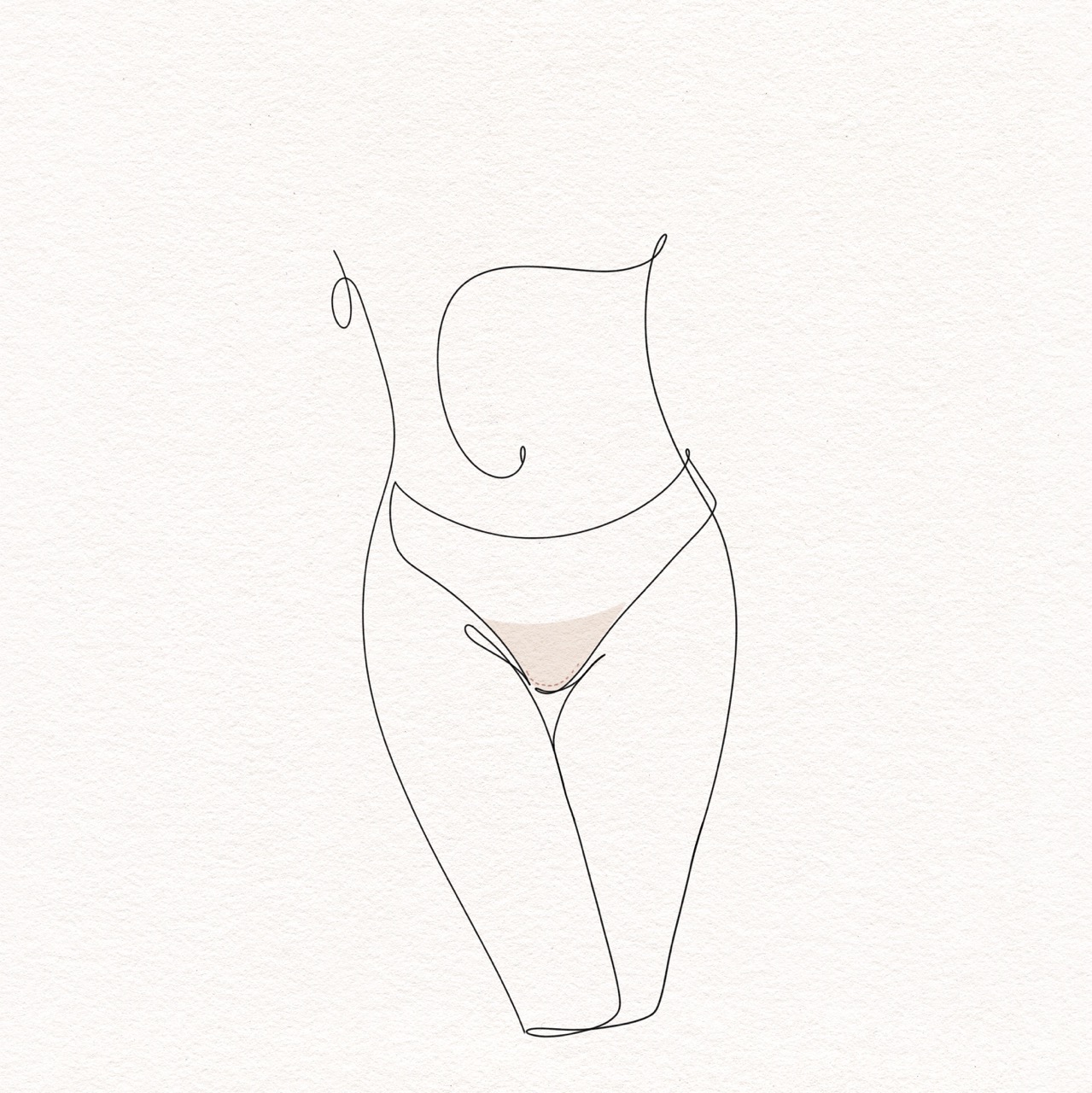
There is considerable normal variation in the size, shape, color, and symmetry of the labia, and labiaplasty does not have one ideal appearance as its goal. You may be concerned with the length or asymmetry of the labia minora, discomfort with clothing, exercise, or intimacy, excess tissue around the clitoral hood, changes in the labia majora, or a combination of concerns.
During your consultation, the areas that concern you are evaluated along with your anatomy and any physical symptoms you experience. Labiaplasty most commonly reduces or reshapes the labia minora, but the amount and distribution of tissue determine how the procedure is planned. Differences between the two sides can also be addressed, although perfect symmetry cannot be guaranteed.
The clitoral hood and labia majora are evaluated separately because concerns in these areas are not corrected simply by reducing the labia minora. Clitoral hood reduction can be combined with labiaplasty when excess tissue in that area contributes to the concern. The labia majora can also be addressed separately through tissue reduction or fat grafting when changes in size or volume are present.
The surgical plan is based on which areas actually concern you rather than treating every part of the external genitalia routinely. This allows the amount of tissue removal, symmetry, surrounding anatomy, and any additional procedures to be considered together while avoiding removal of more tissue than is needed.
What you need to know
Every procedure and treatment we offer is thoughtfully designed to meet your unique goals, lifestyle, and anatomy. Below, you’ll find key details about what to expect—from how the procedure works to recovery guidance and ideal candidacy—so you can feel informed, confident, and empowered at every step of your journey.

An overview of the procedure

View our Before & After Gallery
Scroll through our gallery showcasing the transformations of real patients from Metropolitan Plastic Surgery.

Every patient heals at a different pace, but recovery generally follows a predictable progression. The timeline below provides a guide to what you may expect during the early healing period and as you gradually return to normal activities.

Day of Surgery
You will return home the same day and will need a responsible adult to drive you home. Swelling, tenderness, bruising, and a small amount of spotting or drainage are expected. Numbing medication and peri-pads help with discomfort with additional pain medication used as needed.
You will receive antibiotics for the first 24 hours after surgery. Gentle walking is encouraged, but most of the day should be spent resting. Dr. Aimé will check in with you that evening to make sure you are doing well and answer any early questions.

Days 1-3
Swelling is often most noticeable during the first few days. The labia may temporarily look considerably larger or more asymmetric than expected. This is normal during early healing and does not represent the final result.
Keeping the area clean is particularly important. You may shower beginning 48 hours after surgery. When urinating, you may find it more comfortable to urinate in the shower or use a peri bottle or similar squeeze bottle to gently rinse the area with water. Showering after a bowel movement can also help keep the incisions clean.
Avoid rubbing the incisions with toilet paper or wet wipes during early healing. Gently rinse the area instead and allow it to dry without friction.

Weeks 1-2
Swelling, bruising, and tenderness gradually improve, although the area will not yet look or feel completely healed. Many patients with desk-based or other light work return within approximately 1–7 days. Your first postoperative visit with Dr. Aimé is approximately one week after surgery to evaluate your incisions and early healing. The incisions are closed with dissolvable sutures, but if any external suture knots remain at this visit, Dr. Aimé may trim or remove them for comfort.Light exercise can generally begin after two weeks, depending on your recovery. Continue to avoid strenuous exercise and activities that place pressure or friction on the surgical area.

Weeks 2-4
Swelling continues to decrease and routine daily activities generally become more comfortable. The incisions continue to strengthen and mature as the remaining dissolvable suture material breaks down. Once the incisions are completely closed, feminine wipes may be used gently if needed for itching or hygiene. Continue to avoid sexual intercourse, tampon use, bicycling, horseback riding, motorcycle riding, and other activities that place significant pressure or friction on the area until you have healed sufficiently.

Weeks 4-6
You will return for another postoperative visit approximately 4–6 weeks after surgery. If the incisions are fully healed and your recovery is progressing appropriately, you can generally resume sexual intercourse, tampon use, bicycling, horseback riding, motorcycle riding, swimming and other previously restricted activities. Some residual swelling, firmness, sensitivity, or asymmetry may still be present as the tissues continue to settle.

After Week 6
Most activity restrictions have typically been lifted, although healing continues beneath the surface. Swelling and firmness continue to improve and the scars gradually soften and fade. Dr. Aimé will continue to follow your results, with additional postoperative visits at approximately 3 months and 6 months. The tissues and scars can continue to change for several months as healing progresses.
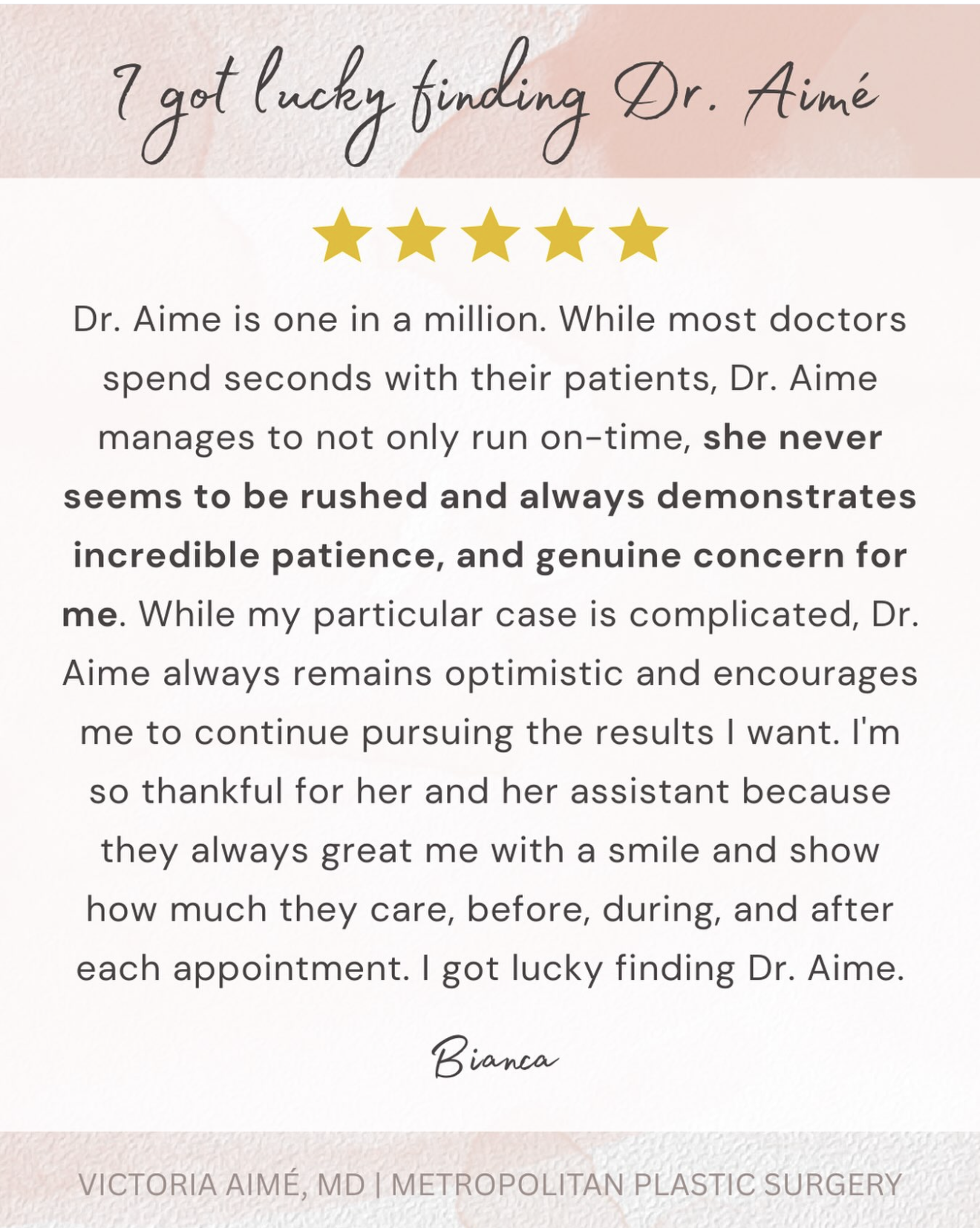
"Dr. Aime is such an amazing Doctor. She was the first Surgeon I've been to and I don't think I could ever see another. I was so nervous going into my appointment, but she made sure I felt comfortable and safe. I'm also very happy with my results. I highly recommend her services."
“I recently underwent a submentoplasty procedure performed by the incredibly talented plastic surgeon, Dr Aimé. My decision to have submentoplasty was not taken lightly and Dr Aimé made sure to thoroughly explain the entire procedure to me during our consultation.”
The total cost of surgery varies based on several factors, including the complexity of the procedure, operating time, anesthesia requirements, and the surgical facility used.
Our consultation fee is $150 and includes a comprehensive evaluation, surgical planning discussion, and personalized recommendations.
Surgical quotes are valid for 90 days from the date they are provided. To secure pricing, the procedure must be booked within this time frame; the surgical date itself may be scheduled beyond 90 days, based on availability and patient preference.
A $500 surgical reservation fee is due at the time of booking and is applied toward your total surgical cost.

Frequently Asked Questions
We’ve gathered answers to some of the most common questions our patients ask about this procedure. Whether you’re just starting your research or preparing for surgery, this section is here to help you feel informed and confident every step of the way.
Ready to start your transformation?
Whether you’re just beginning to explore your options or have specific goals in mind, we’re here to guide you with expertise and compassion.

Learn about related procedures

Thigh Lift
Thigh lift surgery in Scottsdale with Dr. Victoria Aimé begins with evaluating where excess skin and fat are located along your thighs to plan liposuction, skin removal, and the length and location of the resulting scars.

Body Lift
Body lift surgery in Scottsdale with Dr. Victoria Aimé begins with evaluating where excess skin and tissue are located around your abdomen, waist, hips, and buttocks to determine the extent of skin removal and contouring needed.

Liposuction
Liposuction in Scottsdale with Dr. Victoria Aimé begins with evaluating where excess fat is located, your surrounding body proportions, skin quality, and goals to determine which areas should be treated together to improve overall contour.

Brazilian Butt Lift (BBL)
Brazilian Butt Lift (BBL) surgery in Scottsdale with Dr. Victoria Aimé begins with evaluating your waist, hips, buttocks, overall proportions, and available donor fat to plan both the areas of liposuction and the amount of fat transfer based on your goals.
Follow us on socials
Stay connected and informed by following Dr. Aimé on social media. Her content focuses on real-world, practical education in plastic surgery—addressing common patient questions, breaking down new innovations and research, and offering honest insight into what to expect from both surgical and non-surgical procedures. You’ll also find highlights of patient journeys and results (with permission), helping demystify the process while keeping things educational, transparent, and engaging.