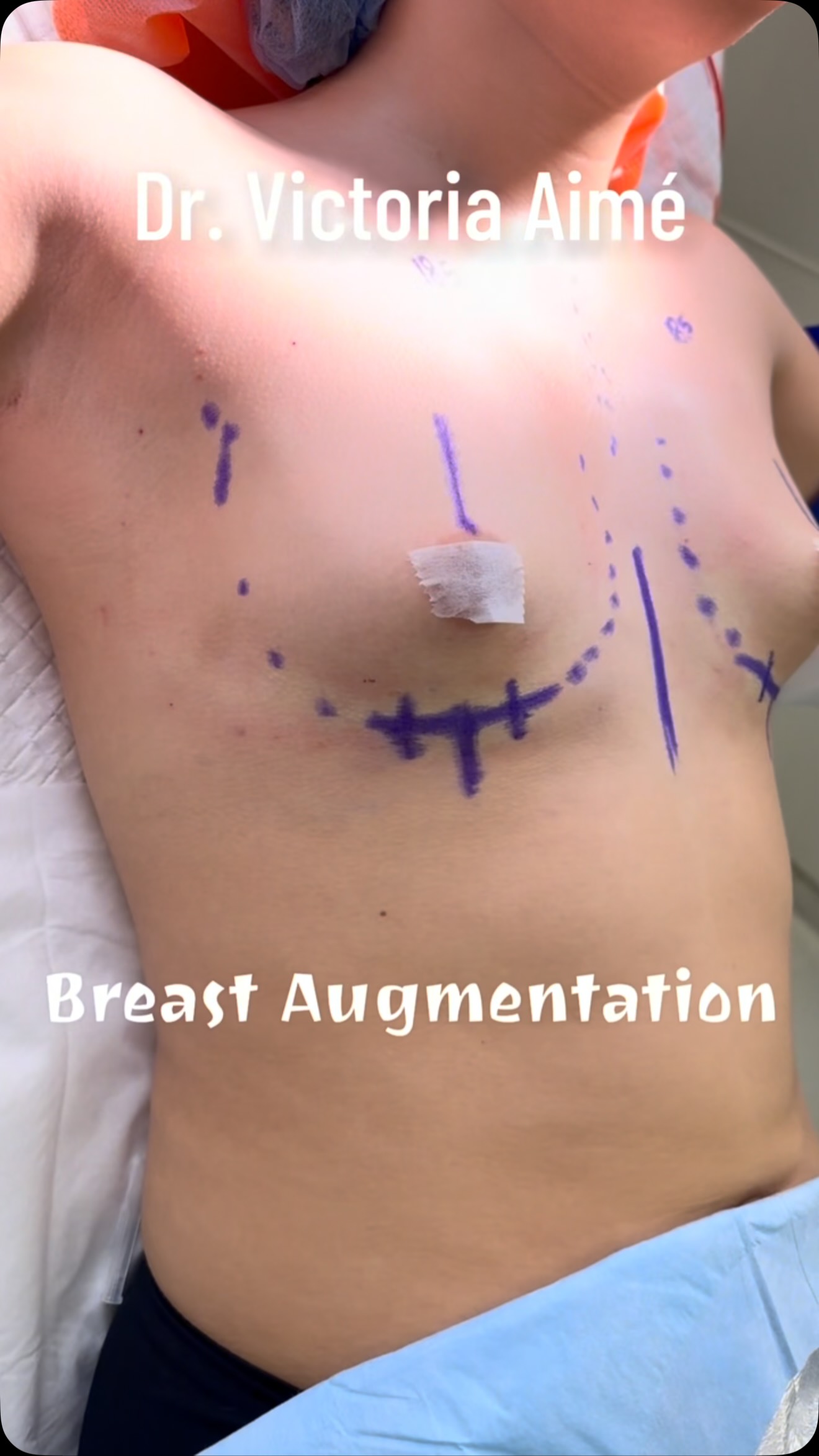
Breast Procedures in Scottsdale, AZ | Dr. Victoria Aimé
Face Procedures in Scottsdale, AZ
Non-Surgical Procedures in Scottsdale, AZ
Male Procedures in Scottsdale, AZ
Body Procedures in Scottsdale, AZ

Breast Implant Exchange

Breast implant exchange in Scottsdale is a highly personalized procedure for patients who want to change their breast size or shape, replace older implants, or address concerns with their existing implants. Your consultation with Dr. Aimé begins with understanding what you would like to change and creating a surgical plan based on your current implants, anatomy, and goals.

Breast Implant Exchange

A Personalized Approach to Breast Implant Exchange?

Breast implant exchange can range from a relatively straightforward replacement of existing implants to a more complex revision involving changes to the breast tissue, implant pocket, or surrounding capsule. Dr. Victoria Aimé begins by evaluating your current implants, breast shape and symmetry, skin and tissue quality, implant position, and any changes that have occurred since your previous surgery.

Your reasons for considering an exchange are equally important. You may want to go larger or smaller, change the shape or feel of your implants, replace a ruptured or deflated implant, or simply prefer a different result than you have now. Your existing implants and operative history are reviewed whenever possible, and new implant options are selected based on your current anatomy and goals.

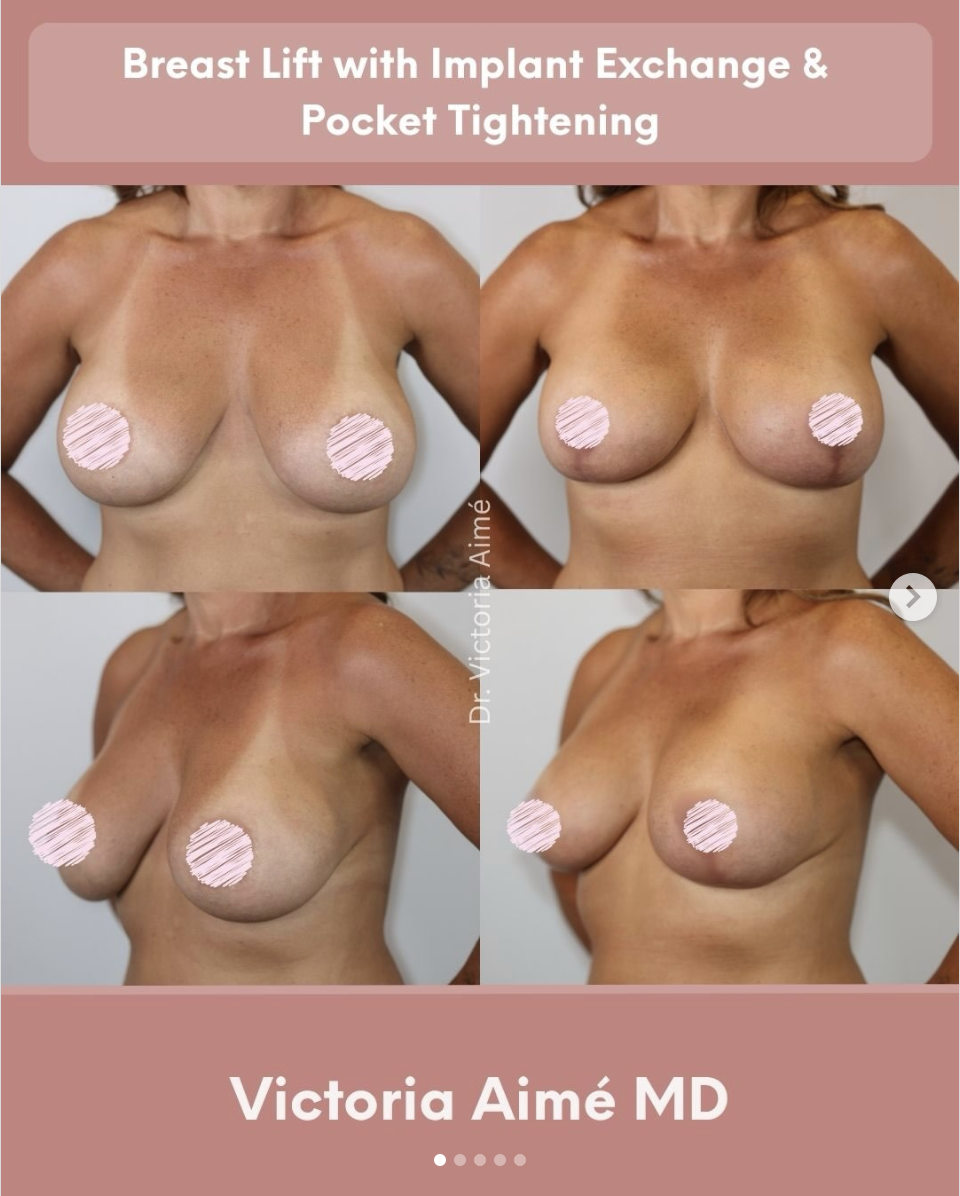
Not every implant exchange requires the same operation. Depending on your findings, the procedure may involve implant replacement alone or may be combined with adjustment of the implant pocket, treatment of the surrounding capsule, fat grafting, or a breast lift. This individualized approach allows Dr. Aimé to address both the implants themselves and the factors affecting the overall shape and appearance of the breasts.

Related Procedures

What you need to know

Every procedure and treatment we offer is thoughtfully designed to meet your unique goals, lifestyle, and anatomy. Below, you’ll find key details about what to expect—from how the procedure works to recovery guidance and ideal candidacy—so you can feel informed, confident, and empowered at every step of your journey.

Overview of the Treatment
Benefits of Breast Implant Exchange
Ideal Candidates for Breast Implant Exchange
Woman wearing burgundy lingerie reclining on a bed

An overview of the procedure

Preparing for Surgery
The Surgical Procedure
Recovering from Surgery
01

Preparing for Breast Implant Exchange

Your Consultation

Your breast implant exchange journey begins with a comprehensive consultation with Dr. Aimé. You will discuss your previous breast surgery, what you like and dislike about your current implants, any changes or concerns you have noticed, and what you hope to achieve with surgery.

Dr. Aimé will examine your breasts and chest, evaluating your current breast shape and symmetry, implant position, skin and tissue quality, nipple position, breast fold, and any evidence of capsular contracture, implant rupture, or other concerns. Your surgical plan is then tailored to both your current anatomy and your goals.

Reviewing Your Existing Implants and Previous Surgery

Whenever possible, bring your implant card or previous operative records to your consultation. Knowing the manufacturer, implant type, size, profile, and dimensions of your current implants can be helpful when planning an exchange.

Your previous surgical approach is also important. Dr. Aimé will consider where your implants are currently positioned, the location of your existing scars, and whether the implant pocket or surrounding capsule needs to be modified during surgery.

Choosing Your New Implants

Choosing a replacement implant involves more than deciding whether you want to be larger, smaller, or approximately the same size. Your current implants provide a useful reference point, but differences in implant width, profile, projection, fill, and gel characteristics can affect how a new implant looks and feels even when the stated volume is similar.

Dr. Aimé will take measurements and discuss the changes you would like to make. Implant sizers and inspiration photos can help define your preferences. If you are happy with your current size, your existing implant dimensions can also help guide selection of a comparable replacement.

Learn More: How Breast Implant Sizing Works →

Planning Any Additional Revision

Not every breast implant exchange requires additional revision. If your implants are well positioned and the surrounding tissues are healthy, the procedure may primarily involve removing the existing implants and replacing them with new ones.

When needed, the surgical plan may also include capsule removal or modification, adjustment of the implant pocket, a change in implant plane, internal support, or fat grafting. If significant breast sagging or excess skin is present, a breast lift may also be considered. These decisions are based on your examination, existing implant position, tissue quality, and goals rather than performed routinely with every implant exchange.

Learn More: What is a Breast Capsulorrhaphy? A Guide to Pocket Tightening for Implants→

Your Preoperative Visit

Before surgery, you will return for a preoperative visit to review and finalize your surgical plan. Your new implant options, implant pocket, planned capsule or pocket work, and any additional procedures will be reviewed. You may try on implant sizers again if you are changing breast size.

You will also receive detailed instructions regarding medications, activity, nutrition, and recovery. Preoperative testing, medical clearance, or breast imaging may be required depending on your age, medical history, symptoms, and surgical plan.

All nicotine products must be stopped for at least 6 weeks before and 6 weeks after surgery to reduce the risk of wound-healing complications.

Learn More: Why Nicotine Must Be Stopped Before and After Plastic Surgery →

Preparing Your Body for Surgery

Maintaining regular physical activity, good nutrition, adequate protein intake, and healthy daily habits can help prepare your body for surgery and recovery. This approach is sometimes called prehabilitation, or “pre-hab.”

You do not need to begin an extreme exercise or diet program before surgery. The goal is to enter surgery well nourished, active, and as healthy as possible.

Learn More: How to Prepare for Plastic Surgery: Your Prehab Checklist →

The Days Before Surgery

In the week before surgery, your prescription medications will be sent to your pharmacy so they can be picked up before your procedure. You do not need to bring these medications with you to the surgery center. A member of Dr. Aimé’s nursing team will call to review your surgical instructions and answer any remaining questions. You may receive a separate preoperative call from the surgery center nursing team as well.

You will receive specific instructions about which medications and supplements to continue, adjust, or stop. Depending on your surgical plan, you may be instructed to take medications before surgery to help reduce pain and nausea and may receive a pre-surgical carbohydrate drink.

You should bathe or shower the night before or morning of surgery and avoid applying lotion or deodorant to the surgical area. Leave jewelry at home, wear glasses rather than contact lenses, and arrive in loose, comfortable clothing with easy slip-on shoes.

You will generally stop eating at midnight before surgery. Small sips of water may be permitted with medications you have specifically been instructed to take. Follow the fasting and medication instructions provided by your surgical and anesthesia teams.

Learn More: Pre-Surgery Carb Drinks: A Simple Way to Boost Recovery →

02

Breast Implant Exchange Procedure

Arriving at the Surgery Center

When you arrive at the surgery center, you will meet the preoperative nursing staff, physician anesthesiologist, and operating room nurse who will be caring for you. Dr. Aimé will meet with you to review the surgical plan and place any necessary surgical markings. If the final implant choice falls between two sizes, she will also confirm whether you would prefer to err toward the larger or smaller option.

Compression stockings and sequential compression devices (SCDs) are placed on your legs to promote circulation, and warming measures are used to help maintain your body temperature. Depending on the length of surgery and your individual risk factors, you may also receive medication to further reduce the risk of blood clots.

Learn More: How SCDs Help Prevent Blood Clots →

Removing the Existing Implants

Whenever possible, Dr. Aimé uses an existing breast surgery incision to access and remove the current implant rather than creating a new scar. The implant and surrounding pocket are evaluated after removal.

The extent of surgery from this point depends on what is found and what was planned before surgery. A healthy capsule does not necessarily need to be completely removed simply because an implant is being exchanged.

Addressing the Capsule and Implant Pocket

A thin layer of scar tissue, called a capsule, naturally forms around every breast implant. If the capsule is healthy and the implant pocket is appropriate, it does not necessarily need to be removed during an implant exchange.

If capsular contracture is present, the surgical approach is individualized. Depending on the condition of the capsule, implant position, existing implant pocket, and previous surgery, Dr. Aimé may release or remove part or all of the capsule (capsulotomy or capsulectomy), exchange the implant, create a new implant pocket in a different tissue plane, or use a combination of these techniques. A capsulectomy is therefore not automatically required for every patient with capsular contracture.

The implant pocket may also be adjusted for reasons unrelated to capsular contracture, such as changing implant size or correcting implant position. When additional support is needed, internal sutures or an absorbable surgical mesh may be used to reinforce the new pocket.

Learn More: How Internal Bras (Mesh) Help Support Your Implants →

Intraoperative Sizing and Final Implant Selection

When changing implant size or dimensions, Dr. Aimé may use temporary implant sizers during surgery to evaluate different options before selecting the final implants. The breasts are assessed for size, shape, projection, implant position, symmetry, and overall proportion.

Your preferences are established before surgery, including a range of acceptable implant sizes and whether you would prefer to err larger or smaller if the final decision falls between two options. Different implant sizes may be selected for each breast when appropriate to improve asymmetry.

Placing the New Implants and Closure

Before the final implants are placed, the implant pockets are carefully prepared and irrigated. The new implants are then inserted using techniques intended to minimize unnecessary handling and contamination.

The incisions are closed with dissolvable sutures beneath the skin. Dr. Aimé typically administers a long-acting local anesthetic around the surgical areas to provide extended pain relief during the early recovery period. A supportive surgical bra is placed before you leave the operating room.

Learn More: Why Dr. Aimé Uses Long-Acting Local Anesthetic With Breast Surgery →

Recovery Room and Going Home

After surgery, you will be taken to the post-anesthesia care unit (PACU), where nursing staff will monitor you as you wake from anesthesia. Your vital signs, comfort, surgical sites, and overall recovery will be observed, and medications can be given as needed for pain or nausea.

Once you are awake, comfortable, and meeting the appropriate discharge criteria, the nursing staff will help you get dressed and review your immediate postoperative instructions with you and your responsible adult.

Most patients undergoing breast implant exchange are able to return home the same day. When appropriate, overnight care may be arranged for close nursing monitoring, assistance, and pain control. More complex revision surgery or procedures combined with other operations may also make overnight monitoring appropriate.

03

Recovering from Breast Implant Exchange

Recovery after breast implant exchange depends on how much surgery is needed. A straightforward exchange using the existing implant pocket may have a relatively quick recovery, while procedures that include capsule removal, pocket adjustment, a change in implant plane, or additional internal support may require more healing time.

Early Recovery

During the first several days, it is normal to experience swelling, tightness, pressure, bruising, and soreness. Long-acting local anesthetic administered during surgery helps with early discomfort, with additional pain medication prescribed as needed.

You will leave surgery in a supportive surgical bra and should begin short, frequent walks once you are safely able. Most patients can shower beginning the day after surgery. You will receive specific instructions for your incisions, medications, sleeping position, and any additional precautions related to the revision procedures performed.

Learn More: When Does Swelling Peak After Surgery →

Activity and Restrictions

Patients undergoing a straightforward implant exchange may feel comfortable returning to desk-based or other non-physical work within several days. More extensive revision surgery or physically demanding work may require approximately one to two weeks away.

During early healing, avoid lifting more than 10 pounds as well as repetitive pushing, pulling, strenuous upper-body activity, and other movements that place stress on the healing tissues. Light exercise can generally begin around two weeks, with activity gradually increased as healing progresses.

Most patients can return to regular exercise and unrestricted activity around six weeks, although restrictions may be extended after more extensive capsule or pocket reconstruction.

Incision and Scar Care

Whenever possible, breast implant exchange is performed through an existing breast surgery incision, most commonly the scar along the breast fold. Additional or longer incisions may occasionally be needed depending on the condition of the implant and capsule or if other procedures are performed at the same time.

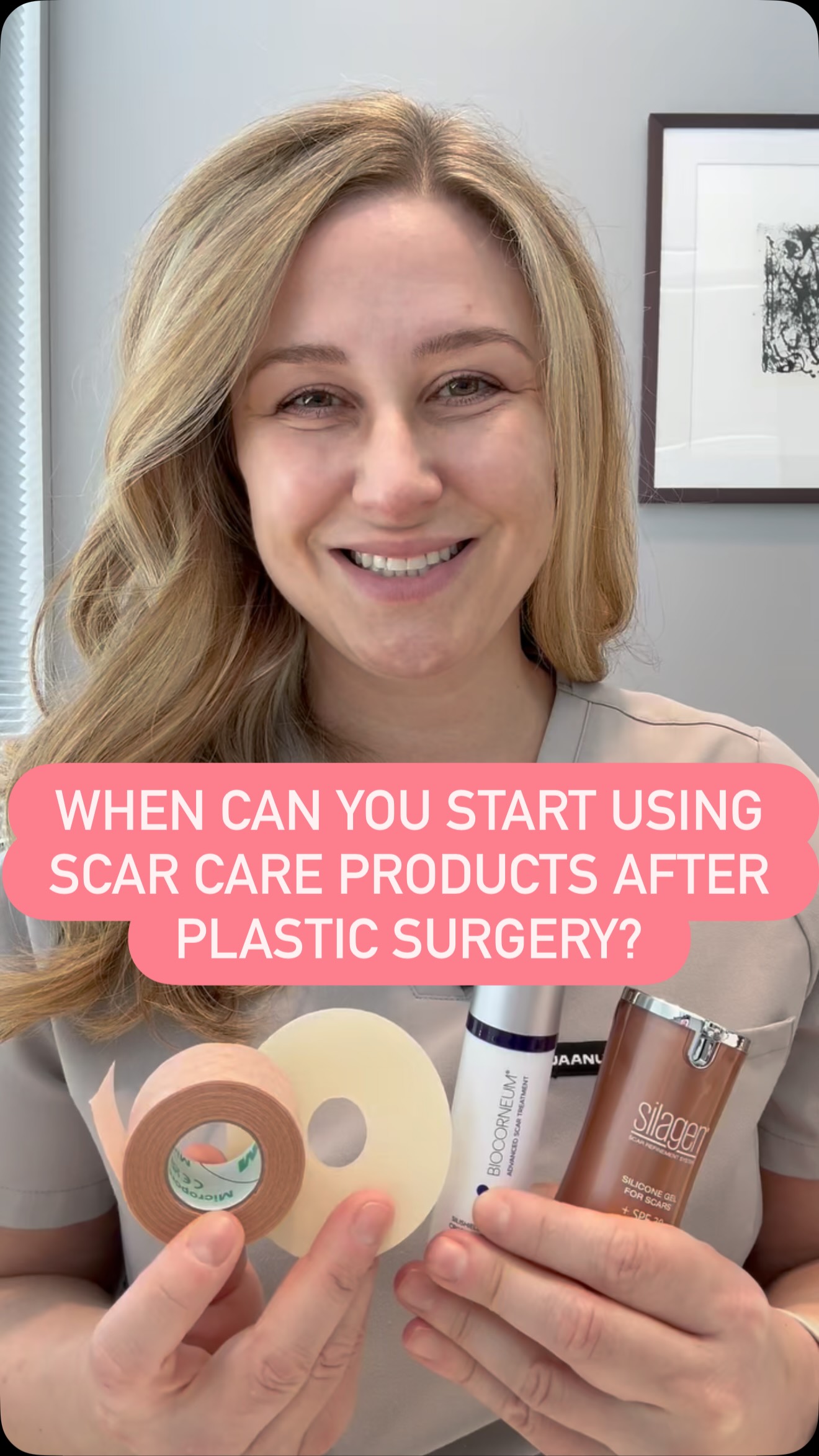
Scar care can often begin approximately 2–4 weeks after surgery, once the incision is fully closed and healing well, and should generally be underway by six weeks. Scar care typically includes scar massage, silicone tape or gel, and careful protection from sun exposure. Dr. Aimé will guide you on when to begin based on how your incision is healing.

Existing scars may temporarily appear more noticeable after being reopened, but they generally soften and fade again as healing progresses. Scar maturation continues for many months and may take a year or longer.

Learn More: When Can You Start Scar Care After Plastic Surgery? →

How Your Breasts Change During Healing

Your breasts may initially appear swollen, firm, high, or somewhat different from one another. The appearance during early recovery also depends on what was changed during surgery. If you selected a different implant size or profile, changed implant planes, or had the implant pockets adjusted, your breasts may look and feel noticeably different from your previous augmentation.

Swelling gradually resolves and the implants and surrounding tissues soften and settle over the following weeks and months. One breast may heal or settle somewhat faster than the other. Temporary changes in breast or nipple sensation, including numbness, increased sensitivity, tingling, or brief electrical sensations, can also occur as the tissues and nerves recover.

Postoperative Follow-Up

Dr. Aimé will check in with you the evening of surgery, and you will have her direct contact information should questions or concerns arise during your recovery.

You will typically return to the office at approximately one and two weeks after surgery so Dr. Aimé can evaluate your incisions, swelling, implant position, and early healing. Steri-Strips are generally removed during this period, and any external suture knots can be trimmed as needed.

Additional visits at approximately one month, three months, six months, and one year allow Dr. Aimé to follow implant position, breast shape, scars, sensation, and the continued evolution of your results. Follow-up may be adjusted based on the extent of your revision surgery and how you are healing.

View our Before & After Gallery

Scroll through our gallery showcasing the transformations of real patients from Metropolitan Plastic Surgery.

Breast Implant Exchange Recovery Timeline

Every patient heals at a different pace, but recovery generally follows a predictable progression. The timeline below provides a guide to what you may expect during the early healing period and as you gradually return to normal activities.

Day of Surgery

You will generally go home the same day with a responsible adult and detailed postoperative instructions. Your supportive surgical bra will already be in place, and long-acting local anesthetic administered during surgery helps with early discomfort.

Begin taking short, frequent walks once you are safely able. You may eat and drink as tolerated and should focus on hydration and adequate nutrition. Swelling, tightness, pressure, and soreness are expected.

Dr. Aimé will check in with you that evening and you will have her direct contact information should questions or concerns arise.

Days 1-3

Soreness, pressure, swelling, and tightness are common during the first few days. Swelling may increase during this period, often reaching its maximum around days 2–4. The long-acting numbing medication used during surgery typically wears off around day 3, so discomfort may temporarily become more noticeable.

Continue short, frequent walks and avoid lifting more than 10 pounds. You may shower beginning the day after surgery and should shower by day 3. Allow soap and water to gently run over the incisions without scrubbing them.

Continue sleeping on your back and avoid sleeping on your side or stomach.

Weeks 1-2

Most patients feel substantially better during the first one to two weeks. After a straightforward implant exchange, patients with desk-based or non-physical jobs may feel comfortable returning to work within several days. More extensive revision surgery or a physically demanding job may require additional time away.

Continue the 10-pound lifting restriction and avoid repetitive pushing, pulling, strenuous upper-body movements, or activities that cause pain or significant pulling across the breasts.

Dr. Aimé will monitor your incisions, swelling, implant position, and early healing during your postoperative visits. Driving can generally resume once you are no longer taking narcotic or other sedating medications and can comfortably perform all necessary driving and emergency maneuvers.

Weeks 24

Light exercise can generally begin around two weeks if healing is progressing appropriately, although restrictions may be extended when significant pocket reconstruction, capsule surgery, or other revision work has been performed.

Increase activity gradually. If an activity causes pain, pulling, increased swelling, or unusual discomfort, reduce the intensity and allow additional time to heal.

Scar care can begin once the incisions are completely closed and healing well, typically between two and four weeks. Submersion in a pool, bath, or other body of water should also wait until the incisions are completely healed.

Temporary changes in breast or nipple sensation, including numbness, increased sensitivity, tingling, or brief “zingers,” can occur as the tissues and nerves recover.

Weeks 4-6

More moderate exercise can generally resume around four weeks if recovery is progressing normally. Patients who have undergone more extensive pocket reconstruction or other revision procedures may need to maintain restrictions longer.

The breasts and implants continue to soften and settle as swelling resolves. If the implant size, profile, or pocket was changed, the breasts may look or feel different from your previous augmentation during this settling process, and one side may settle somewhat faster than the other.

Continue sleeping on your back until approximately six weeks unless Dr. Aimé has advised otherwise.

After Week 6

Most patients can gradually return to regular exercise and normal activity after approximately six weeks if healing is progressing appropriately. Ease back into your previous exercise routine rather than immediately returning to your prior intensity or weights.

You may generally resume side or stomach sleeping and wear underwire bras once the incisions have healed appropriately. Continue scar care and sun protection as recommended.

Although most activity restrictions have ended, your results will continue to evolve. Swelling decreases, the implants and surrounding tissues soften and settle, sensation continues to recover, and scars mature over the following months. Your individual recovery may differ if your implant exchange included more extensive revision of the capsule, implant pocket, or surrounding breast tissues.

Everything from the beginning through surgery and recovery was such a pleasant experience.

“I recently underwent a submentoplasty procedure performed by the incredibly talented plastic surgeon, Dr Aimé. My decision to have submentoplasty was not taken lightly and Dr Aimé made sure to thoroughly explain the entire procedure to me during our consultation.”

Shaneen B
Raquel R.
Read more reviews
Breast Implant Exchange
Pricing

At our practice, patients undergoing Breast Implant Exchange typically invest between $10,000 - $27,000 in total.

The total cost of surgery varies based on several factors, including the complexity of the procedure, operating time, anesthesia requirements, and the surgical facility used.

Our consultation fee is $150 and includes a comprehensive evaluation, surgical planning discussion, and personalized recommendations.

What is included within this estimate?
Procedure/Treatment Options & Pricing
Potential Additional Fees

Surgical quotes are valid for 90 days from the date they are provided. To secure pricing, the procedure must be booked within this time frame; the surgical date itself may be scheduled beyond 90 days, based on availability and patient preference.

A $500 surgical reservation fee is due at the time of booking and is applied toward your total surgical cost.

Frequently Asked Questions

We’ve gathered answers to some of the most common questions our patients ask about this procedure. Whether you’re just starting your research or preparing for surgery, this section is here to help you feel informed and confident every step of the way.

How do I know if I need my breast implants replaced?
Do breast implants need to be replaced every 10 years?
Can I go larger or smaller during breast implant exchange?
Can I switch from saline to silicone implants, or change implant brands?
Will I need a capsulectomy when my implants are replaced?
What if I have capsular contracture?
Can the implant pocket be changed during breast implant exchange?
Will I need a breast lift with my implant exchange?
Will breast implant exchange use my existing scars?
Is recovery easier than my first breast augmentation?
Can different-sized implants be used to improve breast asymmetry?
What happens if one of my implants is ruptured?

Ready to start your transformation?

Whether you’re just beginning to explore your options or have specific goals in mind, we’re here to guide you with expertise and compassion.

Book your consultation

Learn about related procedures

Breast Lift with Implants
Breast Procedures
All

Breast Lift with Implants

A breast lift with implants is a highly personalized procedure that can address both breast sagging and loss of volume or fullness. Your consultation with Dr. Aimé begins with understanding the changes you would like to make and creating a surgical plan tailored to your anatomy and goals.

Fat Transfer to Breasts
Breast Procedures
All

Fat Transfer to Breasts

Fat transfer breast augmentation enhances breast size and shape by using your own fat, harvested from other areas of your body, for a soft, natural result.

Breast Revision
Breast Procedures
All

Breast Revision

Breast revision surgery addresses complications or aesthetic concerns from previous breast procedures, offering improved shape, symmetry, and satisfaction.

Breast Reduction
Breast Procedures
All

Breast Reduction

Experience relief from discomfort and feel confident in your body with breast reduction surgery in Scottsdale, performed by Dr. Victoria Aimé.

Follow us on socials

Stay connected and informed by following Dr. Aimé on social media. Her content focuses on real-world, practical education in plastic surgery—addressing common patient questions, breaking down new innovations and research, and offering honest insight into what to expect from both surgical and non-surgical procedures. You’ll also find highlights of patient journeys and results (with permission), helping demystify the process while keeping things educational, transparent, and engaging.