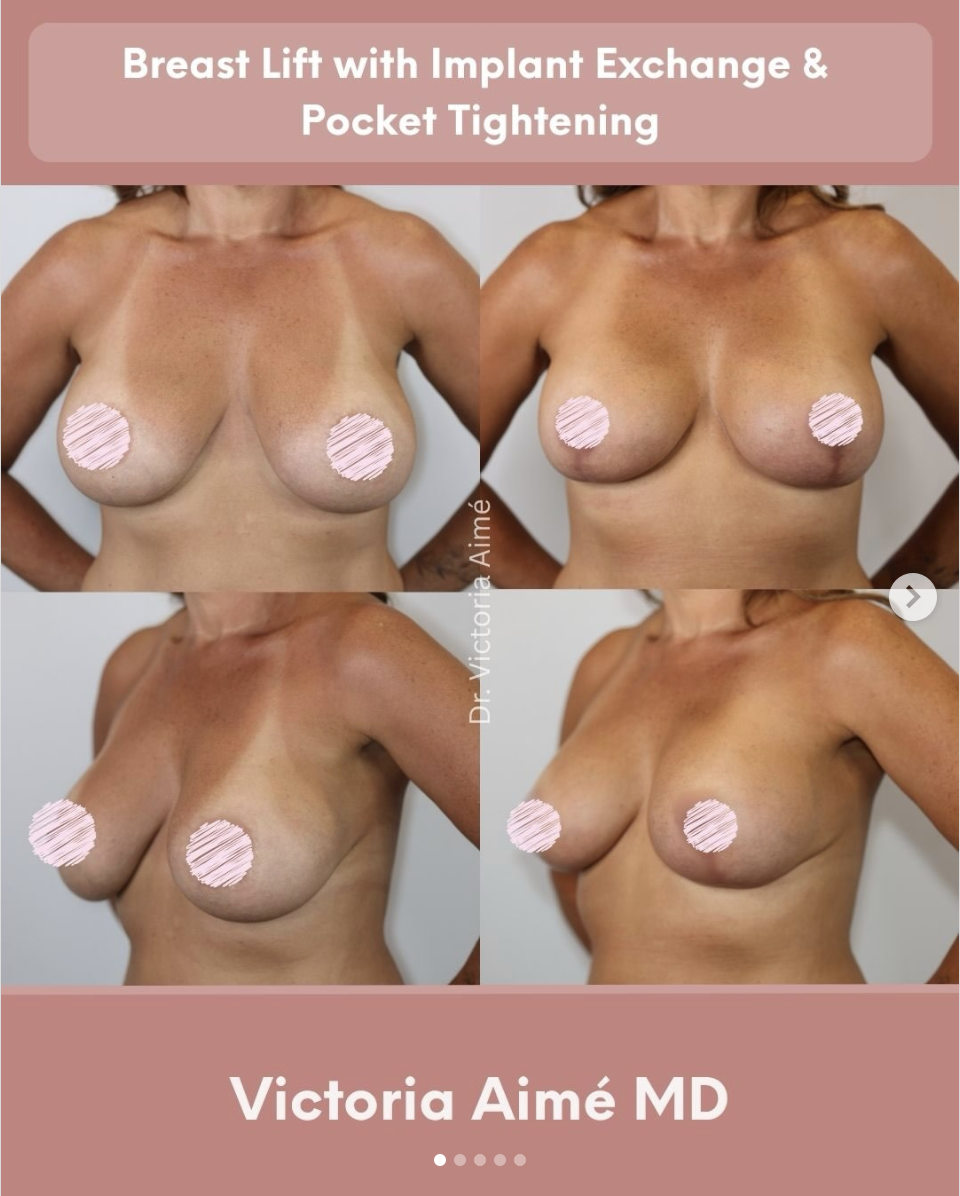
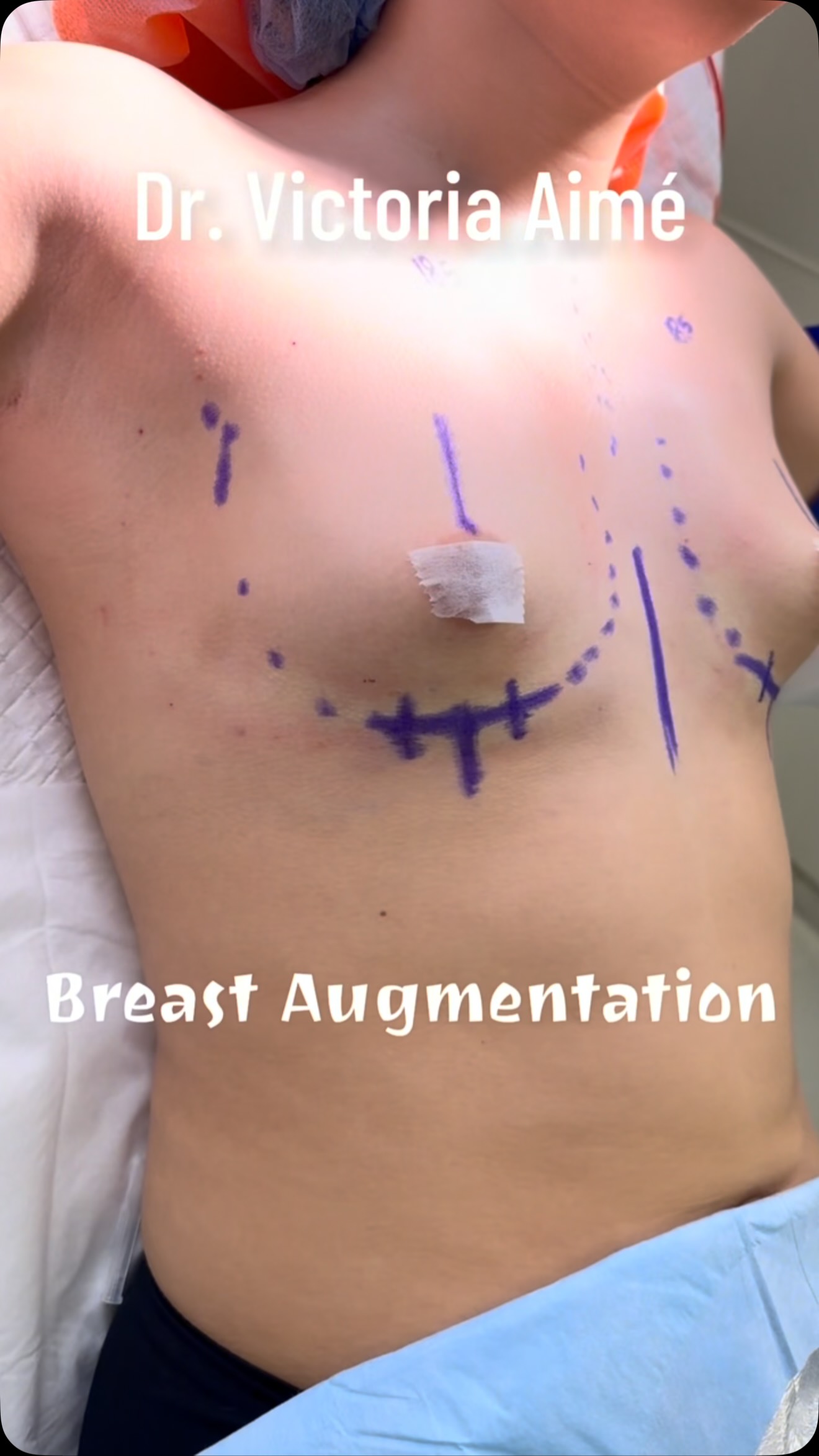
Breast Augmentation
Breast augmentation is one of the most customizable procedures offered by Dr. Victoria Aimé at Metropolitan Plastic Surgery in Scottsdale, Arizona. Your consultation begins with understanding the type of result you hope to achieve, then selecting implant width, profile, volume, and placement based on your anatomy and goals.

%20Large.jpeg)
Breast augmentation involves more than choosing an implant size. Your existing breast width, breast tissue, skin quality, nipple and fold position, chest proportions, and differences between the two breasts all influence which implants and surgical techniques may be best suited to you. Your goals also matter, including how much additional volume you want and whether you prefer more or less projection and upper breast fullness.
During your consultation, measurements of your breasts and chest help determine an implant width that fits your anatomy. From there, implant profile and volume are considered based on the shape, projection, and fullness you would like to achieve. Implant fill, including silicone or saline, is another consideration. Trying on implant sizers can help you compare different volumes and proportions, and differences between the breasts may lead to using different implant sizes when helpful for improving symmetry.
Implant placement is also individualized. The implant may be placed above the muscle beneath the breast fascia (subfascial) or partially beneath the muscle (dual plane), depending on your anatomy, breast tissue, activity level, and goals. Other parts of the surgical plan may include adjusting the breast fold, releasing areas of constricted breast tissue, or adding internal support when needed. If breast position or excess skin cannot be adequately addressed with an implant alone, a breast lift may also be considered.
These decisions are considered together rather than independently. During your consultation, the different options and their tradeoffs are discussed to develop a plan that fits both your anatomy and the type of result you prefer. A range of implant sizes can be selected before surgery, with the final implant choice based on your preferences and how the implants fit your anatomy during surgery.
What you need to know
Every procedure and treatment we offer is thoughtfully designed to meet your unique goals, lifestyle, and anatomy. Below, you’ll find key details about what to expect—from how the procedure works to recovery guidance and ideal candidacy—so you can feel informed, confident, and empowered at every step of your journey.

An overview of the procedure

View our Before & After Gallery
Scroll through our gallery showcasing the transformations of real patients from Metropolitan Plastic Surgery.
Every patient heals at a different pace, but recovery generally follows a predictable progression. The timeline below provides a guide to what you may expect during the early healing period and as you gradually return to normal activities.

Day of Surgery
You will go home the same day with a responsible adult and detailed postoperative instructions. Your surgical support bra will already be in place, and long-acting local anesthetic administered during surgery helps with early discomfort. Medications are prescribed to help control pain and nausea as needed, along with a short course of antibiotics, typically for the first 24 hours after surgery.
Begin taking short, frequent walks once you are safely able to do so. You may eat and drink as tolerated and should focus on hydration and adequate nutrition. Swelling, tightness, pressure, and soreness are normal, and the breasts will typically appear high and firm immediately after surgery.
Dr. Aimé will check in with you that evening to make sure you are recovering appropriately and address any questions or concerns. You will also have her direct contact information should you need to reach her during your recovery.

Days 1-3
Soreness, pressure, and tightness are common during the first few days. The long-acting numbing medication used during surgery typically wears off around day 3, so discomfort may temporarily become more noticeable. Bruising may also become apparent, and swelling commonly increases during this period, often reaching its maximum around days 2–4.
Continue short, frequent walks, but avoid lifting more than 10 pounds. If you have young children, they can sit with you or on your lap, but you should avoid picking them up or carrying them.
You may shower beginning the day after surgery and should shower by day 3 for cleanliness. It is okay for soap and water to gently run over the incisions, but do not scrub them. You may gently raise your arms overhead to wash your hair if this is comfortable. If it is difficult, have a friend or family member wash your hair over a sink or consider professional hair washing once you feel up to leaving home.
Continue sleeping on your back and avoid sleeping on your side or stomach.

Weeks 1-2
Most patients feel substantially better during the first one to two weeks. Patients with desk-based or other non-physical jobs may return to work within several days to one week, while those with more physically demanding jobs are generally encouraged to take approximately two weeks off.
Continue the 10-pound lifting restriction and avoid repetitive pushing, pulling, or strenuous upper-body movements. This includes activities that may seem routine, such as vacuuming, cleaning windows, pulling wet laundry from the washer, or repeatedly loading and unloading a dishwasher. Young children can sit on your lap, but you should continue to avoid lifting or carrying them.
Dr. Aimé typically sees you approximately one and two weeks after surgery to evaluate your incisions, swelling, implant position, and early healing. Steri-Strips are usually removed between one and two weeks after surgery. If external suture knots are present, they are typically trimmed at approximately two weeks.
Driving can usually resume within the first week once you are no longer taking narcotic or other sedating medications and can comfortably perform all necessary driving and emergency maneuvers. Continue sleeping on your back rather than your side or stomach.

Weeks 2-4
Light exercise can generally begin around two weeks after surgery. Start gradually and pay attention to how your body responds rather than immediately returning to your previous routine. If an activity causes pain, pulling, or increased discomfort, back off and allow more time before trying it again.
Sexual activity may also resume as early as two weeks if you feel comfortable. During early healing, keep activity relatively gentle, minimize your physical exertion, and avoid pressure, manipulation, or vigorous contact with the breasts.
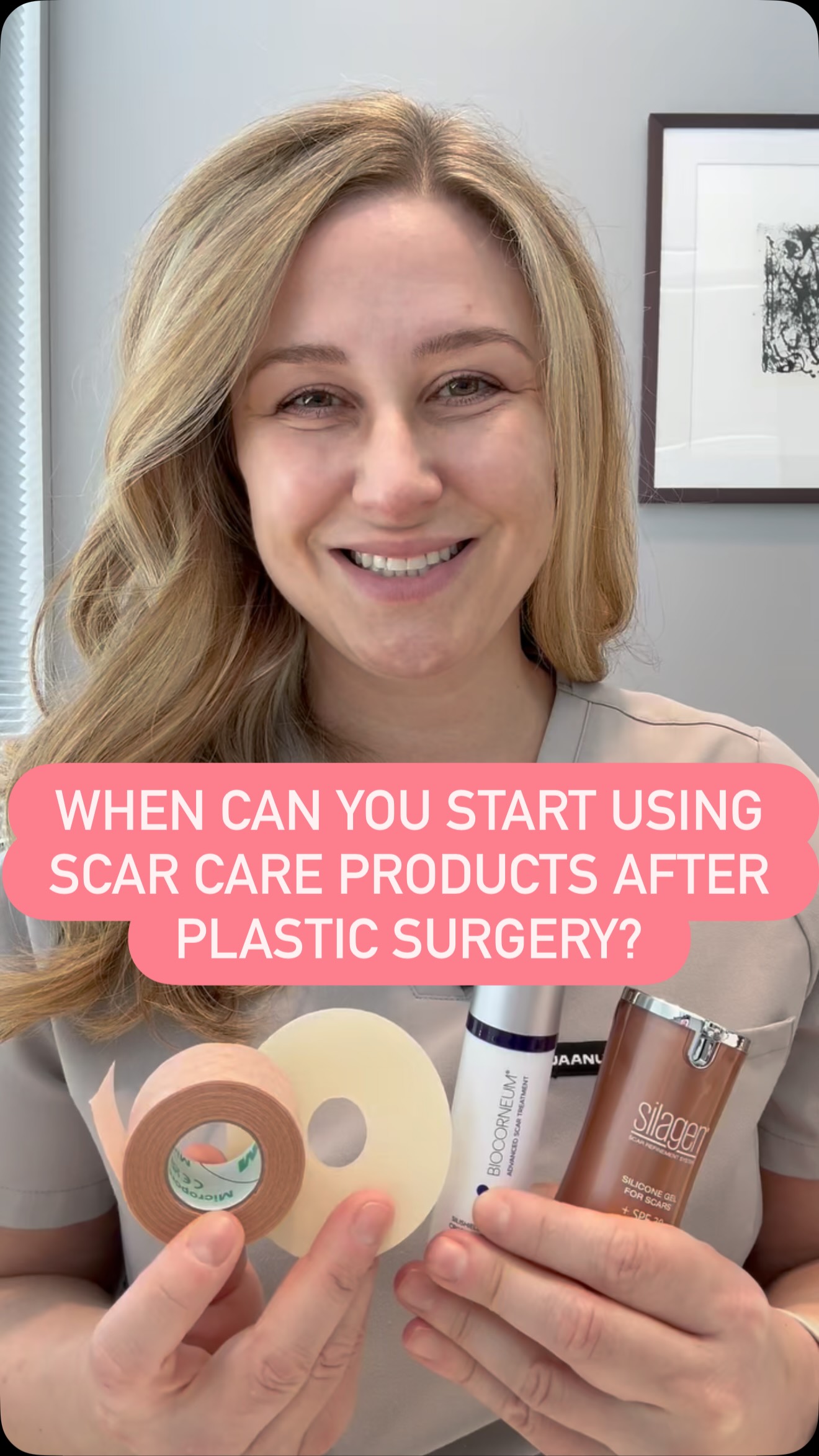
Once the incisions are completely healed and closed, usually around three to four weeks, you may generally resume submerging in a pool, bath, or other body of water. Scar care can also begin once the incisions are sufficiently healed, typically between two and four weeks. This may include scar massage, silicone tape or gel, and careful protection of the scars from sun exposure.
Temporary changes in breast or nipple sensation are common. As the nerves recover, you may notice intermittent tingling, shooting, or brief electrical sensations sometimes described as “zingers.” Increased nipple sensitivity can also occur and usually improves as nerve sensation normalizes. If sensitivity is bothersome, Dr. Aimé may recommend desensitization exercises to help the nerves gradually become accustomed to normal touch again.

Weeks 4-6
More moderate exercise can generally resume around four weeks, provided your recovery is progressing normally. Continue to increase activity gradually and listen to your body. Pain or significant discomfort is a reason to reduce the intensity and give yourself additional time to heal.
The breasts will continue to soften and the implants will gradually settle as swelling resolves and the surrounding tissues relax. It is normal for one breast to settle somewhat faster than the other.
Continue sleeping on your back and avoid sleeping on your side or stomach until approximately six weeks after surgery.

After Week 6
Most patients can return to regular exercise and normal activity after approximately six weeks if healing is progressing appropriately. Ease back into your exercise routine rather than immediately returning to your previous intensity or weights, and reduce your activity if something causes pain or unusual discomfort.
At six weeks, you may also resume sleeping on your side or stomach and purchase new bras if desired. Underwire bras are acceptable at this point once the inframammary incisions have healed appropriately. If scar care has not already begun, it should generally be started by this stage and may include scar massage, silicone tape or gel, and ongoing sun protection.
Although most activity restrictions have ended, your results will continue to evolve. The implants and surrounding tissues soften and settle over the following months, sensation may continue to change as nerves recover, and scars gradually mature and fade. Dr. Aimé continues to follow your progress at approximately three months, six months, and one year after surgery.
"Dr. Aime is simply amazing. Truly such a gem of a human being. I looked at a lot of different doctors and I can say without a doubt that I’m so beyond grateful that I chose her as my Dr. She is extremely detailed, talks you through everything and just makes you feel so comfortable. She will be honest about what she thinks and will help you make the best decision for you and your body. Dr Aime goes above and beyond for her patients. I truly have never come across a Dr that cares so much about her patients and is so attentive. And on top of that her handiwork is par none. She has such an attention to detail that you will without a doubt be so happy with the work you have done with her."
“I recently underwent a submentoplasty procedure performed by the incredibly talented plastic surgeon, Dr Aimé. My decision to have submentoplasty was not taken lightly and Dr Aimé made sure to thoroughly explain the entire procedure to me during our consultation.”
The total cost of surgery varies based on several factors, including the complexity of the procedure, operating time, anesthesia requirements, and the surgical facility used.
Our consultation fee is $150 and includes a comprehensive evaluation, surgical planning discussion, and personalized recommendations.
Surgical quotes are valid for 90 days from the date they are provided. To secure pricing, the procedure must be booked within this time frame; the surgical date itself may be scheduled beyond 90 days, based on availability and patient preference.
A $500 surgical reservation fee is due at the time of booking and is applied toward your total surgical cost.
Frequently Asked Questions
We’ve gathered answers to some of the most common questions our patients ask about this procedure. Whether you’re just starting your research or preparing for surgery, this section is here to help you feel informed and confident every step of the way.
Ready to start your transformation?
Whether you’re just beginning to explore your options or have specific goals in mind, we’re here to guide you with expertise and compassion.

Learn about related procedures

Breast Implant Exchange
Breast implant exchange in Scottsdale is a highly personalized procedure for patients who want to change their breast size or shape, replace older implants, or address concerns with their existing implants. Your consultation with Dr. Aimé begins with understanding what you would like to change and creating a surgical plan based on your current implants, anatomy, and goals.

Breast Lift with Implants
Breast lift with implants in Scottsdale with Dr. Victoria Aimé combines breast reshaping and repositioning with added implant volume and fullness. Your surgical plan is customized based on your anatomy, existing breast tissue, implant preferences, and goals.

Fat Transfer to Breasts
Breast fat transfer in Scottsdale with Dr. Victoria Aimé begins with evaluating your breast shape, desired volume, asymmetry, and available donor fat to determine how fat transfer can be used to reshape or add volume to the breasts without implants.

Breast Revision
Breast revision surgery in Scottsdale with Dr. Victoria Aimé begins with understanding what you would like to change and evaluating your implants, breast tissue, skin, implant pockets, breast position, and previous scars to determine which combination of revision techniques may best address your concerns.
Follow us on socials
Stay connected and informed by following Dr. Aimé on social media. Her content focuses on real-world, practical education in plastic surgery—addressing common patient questions, breaking down new innovations and research, and offering honest insight into what to expect from both surgical and non-surgical procedures. You’ll also find highlights of patient journeys and results (with permission), helping demystify the process while keeping things educational, transparent, and engaging.