
What Is the Difference Between Mesh Used in Breast Surgery and Hernia Surgery?
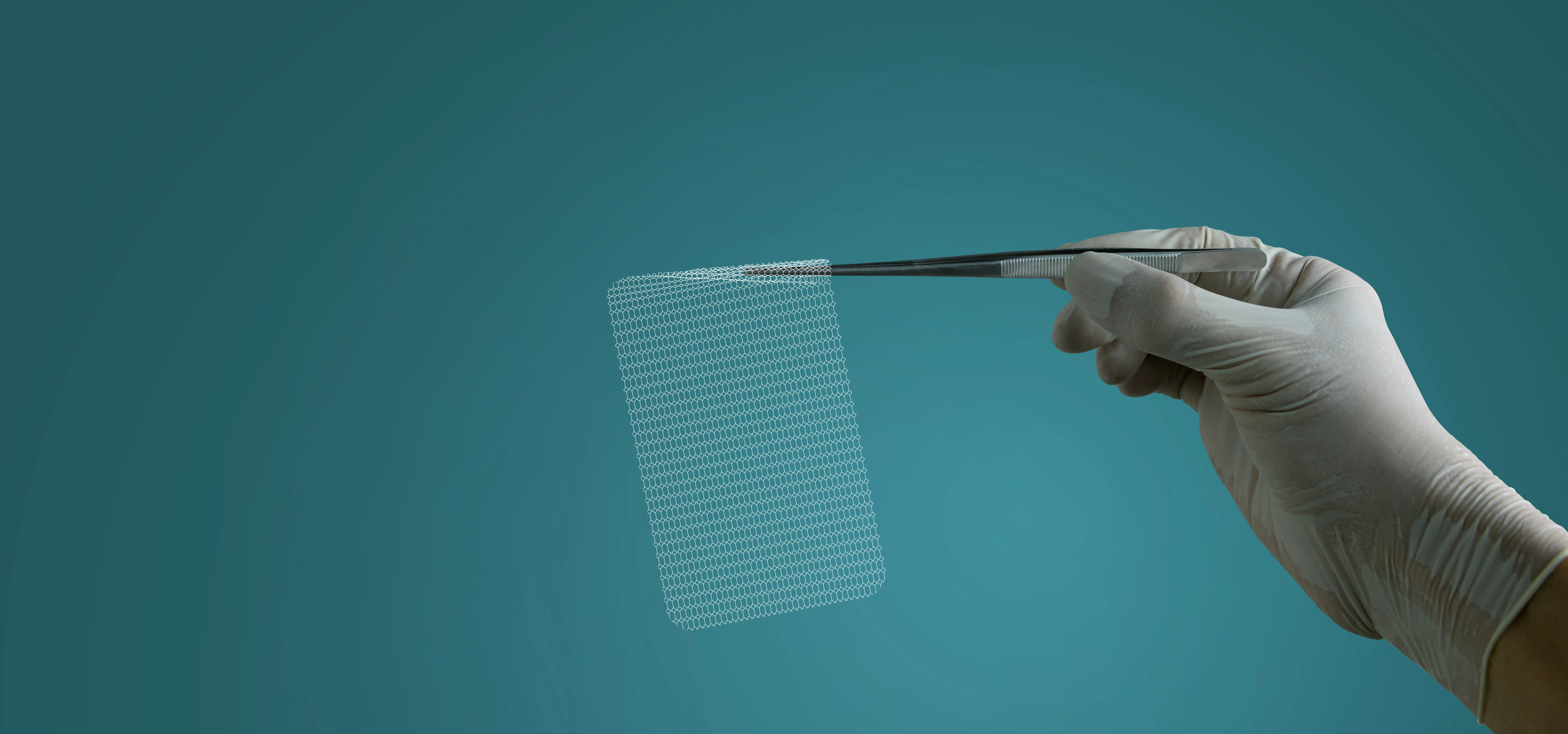
Patients often hear the word mesh and assume it refers to one single material. It does not. There are several different types of surgical mesh, and they behave very differently in the body.
Understanding those differences is important, especially if you are considering breast augmentation, breast revision, reconstruction, or abdominal hernia repair.
The Three Main Types of Surgical Mesh
Broadly speaking, there are three main categories of mesh used in the human body:
1. Permanent Synthetic Mesh
This type of mesh is designed to remain in the body indefinitely unless it is surgically removed.
It is commonly used in abdominal hernia surgery, where long-term strength is critical. The goal is to reinforce weakened tissue and prevent recurrence. Because it does not dissolve, it maintains its structural support permanently.
You can think of it like a permanent suture — it will not go away on its own.
However, permanent mesh can be more problematic in contaminated fields (for example, if there is bowel injury during surgery), because it has a higher risk of infection in those situations. We also generally do not use permanent mesh in areas where radiation is needed (such after some cancer removal surgeries).
2. Long-Lasting, Absorbable Mesh (P4HB)
In breast surgery, we commonly use a different type of mesh made from a material called P4HB (poly-4-hydroxybutyrate).
This mesh:
- Provides additional internal support
- Helps stabilize a breast implant
- Reinforces tissue during healing
- Gradually incorporates into your body
Unlike permanent mesh, P4HB is long-lasting but absorbable. It typically resorbs over approximately 18 to 24 months. During that time, your body replaces it with its own collagen, creating natural internal support.
This makes it particularly useful in:
- Breast augmentation
- Breast lift with implants
- Implant revision
- Some reconstruction procedures
It functions almost like an “internal bra” during the healing process — but it is not permanent. Learn more about how internal bras (mesh) help support breast implants.
3. Biologic Mesh (Acellular Dermal Matrix)
A third category is biologic mesh, often called acellular dermal matrix (ADM).
This material is derived from:
- Human cadaver skin, or
- Porcine (pig) skin
It is processed so that the living cells are removed, leaving behind a collagen framework that integrates into your tissue.
ADM is frequently used in breast reconstruction, particularly after mastectomy. It may also be selected in situations where infection risk or tissue quality is a concern.
In abdominal surgery, if there is contamination (such as bowel injury), surgeons may choose biologic mesh instead of permanent synthetic mesh because it is generally less prone to infection in those settings. In breast reconstruction surgery, surgeon's will often use this if radiation is needed.
Due to cost, ADM is typically used in reconstructive rather than cosmetic breast surgery.
Why the Difference Matters
The term “mesh” is broad, but the materials differ in:
- How long they last
- How they integrate into tissue
- Infection risk in certain settings
- Cost
- Surgical indication
In breast surgery, we do not use permanent polypropylene hernia mesh for cosmetic procedures. The mesh used in aesthetic breast surgery is typically long-lasting but absorbable (P4HB).
In abdominal hernia repair, permanent mesh is often preferred because the goal is durable, long-term reinforcement.
The Bottom Line
Not all mesh is the same.
Permanent hernia mesh is designed to stay in the body indefinitely.
P4HB mesh used in breast surgery provides temporary support and gradually dissolves.
Biologic mesh (ADM) is commonly used in breast reconstruction and certain higher-risk surgical settings.
If you are considering breast surgery and have questions about mesh, it is reasonable to ask what material is being used and why. Each type has a specific purpose, and the choice depends on the surgical goal and tissue environment.
If you’re considering breast surgery and have questions about support materials, schedule a consultation to discuss your options and determine what approach is most appropriate for your anatomy and goals.
Victoria Aimé, MD
Board-Certified Plastic Surgeon
Metropolitan Plastic Surgery | Scottsdale, Arizona
Related Articles:
When Can You Start Scar Care After Plastic Surgery? →
The Secret to Fading Scars After Surgery: Paper Tape →
How Plastic Surgeons Minimize Tension on Incisions to Create Better Scars →
Hypertrophic vs. Keloid Scars: What’s the Difference and How to Prevent Them →
Our surgical and non-surgical treatment options
Ready to start your transformation?
Whether you’re just beginning to explore your options or have specific goals in mind, we’re here to guide you with expertise and compassion.

Read more articles

Why the Breast Crease Sometimes Needs to Be Lowered During Breast Augmentation
Breast augmentation planning involves more than choosing an implant size. Learn why a high or tight breast crease may need to be carefully lowered, how the new crease can be reinforced, and how this helps the implant sit in a more balanced position.
Breast Lift With Implants: Why I Staple Before I Cut
How do I decide exactly how much skin to remove during a breast lift with implants? I use a technique called tailor tacking to temporarily staple the breast skin into its planned position before removing the excess. This allows me to preview the new breast shape, evaluate nipple position, symmetry, and tension, and make adjustments before committing to the final skin removal and closure.

Does Breast Implant Size Affect Price? What Actually Determines Cost
Breast implant size (ccs) and profile generally do not affect the cost of breast augmentation. Scottsdale plastic surgeon Dr. Victoria Aimé explains what actually determines implant pricing, including implant manufacturer, saline versus silicone, gel cohesivity, and fill level.

Motiva Preservé Breast Augmentation: What Patients Should Know Before Choosing This “New” Technique
Motiva Preservé breast augmentation is being marketed as a minimally invasive, tissue-preserving technique with faster recovery and better outcomes. While it introduces some thoughtful concepts—like preserving natural breast anatomy—it also comes with important limitations, including blind pocket dissection, restricted implant options, and limited long-term data. This article provides an honest, evidence-based breakdown to help patients understand whether this approach is truly beneficial or simply well-marketed.