
What Is a Breast Auto-Augmentation?
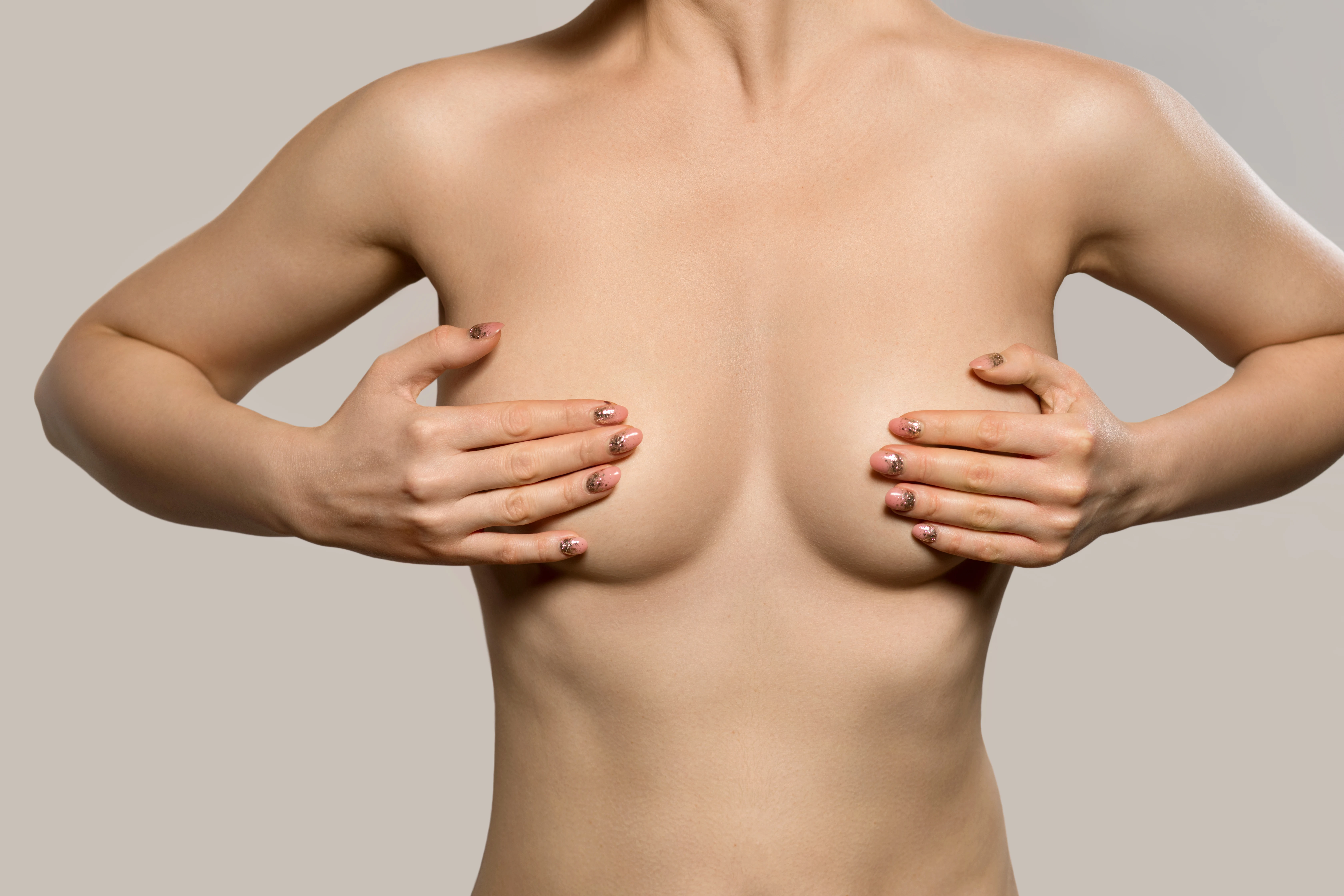
Breast auto-augmentation is an advanced breast lift technique that reshapes and repositions your existing breast tissue to improve projection — without adding an implant.
Rather than removing and discarding lower breast tissue during a lift, this technique preserves and repositions that tissue to enhance internal support and contour. It is a refinement of a traditional mastopexy designed to maintain as much natural volume as possible while improving shape.
Understanding the Traditional Breast Lift
To understand auto-augmentation, it helps to first understand how a standard breast lift (mastopexy) is performed.
Over time, the breast often becomes:
- Wider
- Longer
- Lower on the chest
- Less projected
This occurs due to pregnancy, weight loss, aging, genetics, and natural skin laxity. The lower pole elongates, the base widens, and the nipple-areola complex descends.
The goals of a traditional breast lift are to:
- Narrow the breast
- Shorten its vertical length
- Improve projection
- Reposition the nipple-areola complex
- Tighten the surrounding skin
How Tissue Is Removed in a Traditional Lift
Reshaping the breast requires strategic removal of tissue from the lower portion of the breast.
Central Lower Breast Tissue Removal (Narrowing)
A central portion of tissue from the lower breast is removed to narrow the breast base. This helps convert a wide, flattened contour into a more projected, conical shape.
Without narrowing the base, a breast may be lifted but still appear broad.
Excess Lower Pole Tissue Removal (Shortening)
Additional tissue is removed along the bottom of the breast to shorten its vertical height. This reduces the elongated, bottom-heavy appearance and allows the breast to sit higher on the chest wall.
The remaining tissue is then reshaped and elevated, and the nipple-areola complex is repositioned to a more youthful location. The skin is tightened around the new breast contour.
How Much Tissue Is Removed?
The amount of tissue removed varies significantly.
In patients with larger breasts, the removed portion may represent a small percentage of total volume.
However, in patients with limited existing breast tissue — particularly after weight loss or pregnancy — the tissue removed can represent a meaningful portion of what they have. In these cases, a traditional lift may leave the breast smaller or flatter than anticipated.
This variability is one reason why surgical planning and technique selection matter.
What Is Breast Auto-Augmentation?
Breast auto-augmentation modifies the traditional lift approach.
Instead of discarding the lower breast tissue that would normally be removed, that tissue can be preserved, reshaped, and repositioned higher within the breast mound — typically secured beneath the nipple-areola complex.
This allows the patient’s own tissue to function as internal structural support.
The goals are to:
- Preserve existing breast volume
- Improve forward projection
It reshapes the tissue you already have. It does not add new volume.
Setting Realistic Expectations
Breast auto-augmentation does not significantly increase cup size, nor does it create the round upper pole fullness associated with implants.
If substantial size enhancement or dramatic upper fullness is desired, a breast implant remains the more predictable option.
Auto-augmentation is best viewed as a volume-preserving lift — not a volume-adding procedure. If you'd like to lift your breasts and add volume, I recommend considering a breast implant or fat transfer.
Who Is a Good Candidate?
This may be particularly appealing to patients who want to preserve their natural breast volume without adding an implant. Auto-augmentation can also be incorporated into a breast lift when implants are being added. If you're considering both procedures, learn more about how a breast lift with implants is planned and shaped during surgery.
Candidacy depends on tissue quality, degree of sagging, and overall aesthetic goals.
Scars and Recovery
The incision pattern is typically the same as a traditional lift (it does not add any additional scars) and often includes an anchor-shaped scar (around the areola, vertically down the breast, and along the fold).
Scars are permanent but generally fade with time. Breast auto-augmentation generally does not add significant recovery compared with a standard breast lift.
If you are considering a breast lift in Scottsdale, AZ and would like to discuss whether auto-augmentation is appropriate for you, schedule a consultation for a personalized evaluation and surgical plan.
Victoria Aimé, MD
Board-Certified Plastic Surgeon
Metropolitan Plastic Surgery | Scottsdale, Arizona
Related Articles:
Breast Lift With Implants: Why I Staple Before I Cut →
How Internal Bras (Mesh) Help Support Your Implants →
Can I Downsize My Breast Implants? Here’s What You Need to Know →
Our surgical and non-surgical treatment options
Ready to start your transformation?
Whether you’re just beginning to explore your options or have specific goals in mind, we’re here to guide you with expertise and compassion.

Read more articles

Why the Breast Crease Sometimes Needs to Be Lowered During Breast Augmentation
Breast augmentation planning involves more than choosing an implant size. Learn why a high or tight breast crease may need to be carefully lowered, how the new crease can be reinforced, and how this helps the implant sit in a more balanced position.
Breast Lift With Implants: Why I Staple Before I Cut
How do I decide exactly how much skin to remove during a breast lift with implants? I use a technique called tailor tacking to temporarily staple the breast skin into its planned position before removing the excess. This allows me to preview the new breast shape, evaluate nipple position, symmetry, and tension, and make adjustments before committing to the final skin removal and closure.

Does Breast Implant Size Affect Price? What Actually Determines Cost
Breast implant size (ccs) and profile generally do not affect the cost of breast augmentation. Scottsdale plastic surgeon Dr. Victoria Aimé explains what actually determines implant pricing, including implant manufacturer, saline versus silicone, gel cohesivity, and fill level.

Motiva Preservé Breast Augmentation: What Patients Should Know Before Choosing This “New” Technique
Motiva Preservé breast augmentation is being marketed as a minimally invasive, tissue-preserving technique with faster recovery and better outcomes. While it introduces some thoughtful concepts—like preserving natural breast anatomy—it also comes with important limitations, including blind pocket dissection, restricted implant options, and limited long-term data. This article provides an honest, evidence-based breakdown to help patients understand whether this approach is truly beneficial or simply well-marketed.